
The Orchid Way
ABA Therapy in Washington
Applied Behavior Analysis (ABA)
ABA therapy at Orchid ranges from 4-6 focused hours a week to a full 30-40, with your BCBA recommending the right number after an assessment.
At Orchid, ABA isn't just a standalone service. It's an integrated, multidisciplinary pathway to help learners grow across all areas of life. Dr. Flick and the Orchid team have spent years developing a unique blend of therapies that address each learner's needs comprehensively, combining ABA with speech therapy, occupational therapy, and other specialized interventions. Our approach ensures that learners not only make progress in behavior but also in communication, motor skills, social engagement, and academic readiness.
Free, no-obligation conversation
Find the right support for your child
Request received
A member of the Orchid Academy care team will call you back within 24 hours to talk through next steps. Prefer to talk now?
Call (425) 699-7164
Unlocking Potential with a Holistic, Personalized Approach

Why ABA Matters
At Orchid Academy, we believe in the transformative power of Applied Behavior Analysis (ABA) to create meaningful progress for children with autism. Here's why ABA is essential:
- Skill Development
- ABA helps children build critical communication, social, and daily living skills, tailored to their unique needs.
- Evidence-Based Practices
- We use scientifically proven techniques to ensure every intervention is effective and impactful.
- Holistic Approach
- Our ABA programs are seamlessly integrated with other services, such as speech and occupational therapy, for comprehensive support.
- Empowering Independence
- ABA equips children with tools to navigate their world confidently, fostering independence and success.
At Orchid, we are committed to partnering with families to unlock every child's potential through ABA and beyond.
What is Applied Behavioral Analysis (ABA)?
Applied Behavior Analysis (ABA) is a scientific approach to understanding and improving behavior. ABA focuses on how behavior works in real-life situations and uses evidence-based techniques to teach new skills, improve communication, and reduce behaviors that might interfere with learning or quality of life.
In ABA, we focus on:
- Data-Driven Decisions
- ABA uses data to track progress and adjust strategies in real-time.
- Skill-Building
- We teach practical skills that help individuals live more independently, from communication to problem-solving.
- Behavioral Support
- ABA helps reduce challenging behaviors by understanding what triggers them and teaching positive alternatives.
What does an ABA session look like at Orchid?
An ABA session is carefully structured but flexible, always tailored to the unique needs and goals of each learner. Here's what a typical session might include:
- Warm-Up & Rapport Building
- The session often starts with a quick check-in, allowing the learner to settle in comfortably. We might play a preferred game or engage in a brief, fun activity to build rapport and ease into the session.
- Goal-Oriented Activities
- Each session is driven by specific goals, whether it's improving communication, fine motor skills, social interaction, or another targeted skill. Activities are designed to be engaging and practical, incorporating the learner's interests to keep them motivated. For example, if a goal is to enhance communication, we might use PECS or Proloquo2Go to encourage requesting or labeling items. If the focus is on social skills, we might role-play social scenarios or engage in group activities to practice turn-taking and sharing.
- Positive Reinforcement & Compassionate Support
- Throughout the session, we use encouragement through compassionate support to reinforce desired behaviors. This means offering not just rewards but also kind, thoughtful support that motivates and nurtures the learner. Whether it's verbal praise, a favorite activity, or a comforting gesture, our approach ensures that learners feel valued and understood while progressing toward their goals.
- Modern Data Collection
- We constantly track progress through data collection, noting how the learner responds to different activities and interventions. This helps us adjust the approach in real time to meet the learner's evolving needs.
- Parent Collaboration
- At the end of the session, we often collaborate with parents to discuss progress, challenges, and next steps. We share strategies that can be reinforced at home and celebrate any achievements, big or small.
- Fun & Engagement
- Learning through play is essential! Every ABA session at Orchid is designed to feel natural and enjoyable. Whether we're incorporating art, building blocks, or outdoor activities, the goal is always to keep learning engaging and meaningful for the learner.
How Many Hours of ABA Therapy Does My Child Need?
- How many hours of ABA therapy per week does my child need?
- There is no one-size-fits-all number. Your BCBA recommends hours after a personalized assessment. Comprehensive programs, especially for early intervention, are typically 30-40 hours per week, the intensity best supported by research. Learners working on focused goals like social skills may need as little as 4-6 hours per week.
- How often is ABA therapy?
- Most learners attend sessions several days a week. Your BCBA builds the weekly schedule around your family's routine, not the other way around, so how many days a week your child attends follows from the hours in their plan rather than a fixed template.
- How long is an ABA therapy session?
- Session length is tailored to your child's age, attention span, and goals: a toddler's schedule accounts for naps and play, while a school-age learner's may run longer. Your BCBA sets session length as part of the same assessment that recommends weekly hours.
- Is 6 hours of ABA therapy a week enough?
- For some learners, yes. A focused program of 4-6 hours per week can be effective for children who primarily need support with social skills or mild behavior adjustments. For building foundational communication and daily-living skills, research supports more intensive schedules, and many families start smaller and add hours as they see progress.
For a deeper look at how families weigh schedules, naps, school, and progress, read our full guide: How Many Hours of ABA Therapy Does My Child Need?
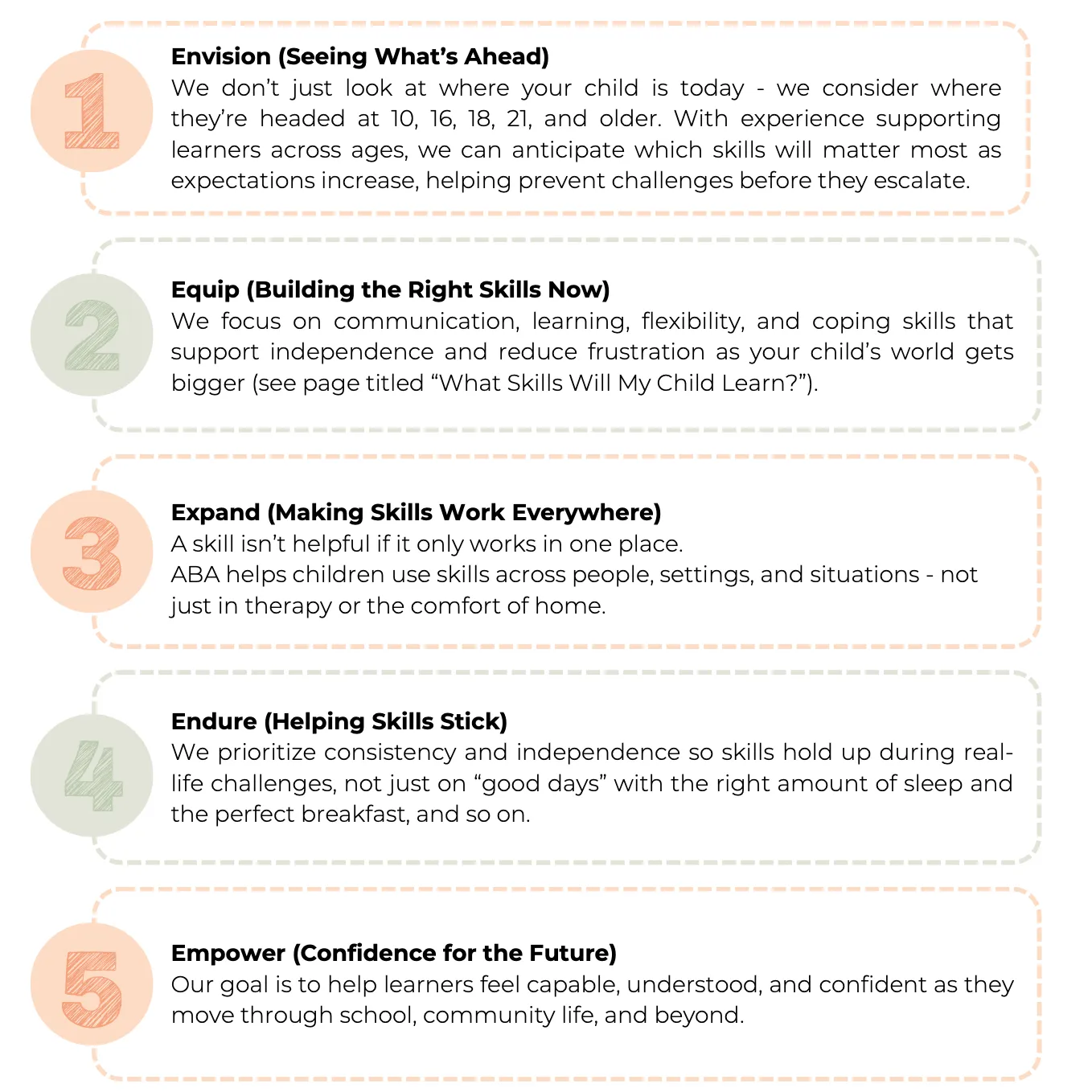
Understanding How ABA Helps: The 5 E's
Some behaviors feel manageable early on - especially in safe, supportive environments. As children grow and expectations increase, gaps in communication or coping can become more visible. Planning ahead helps reduce stress later. This is how we turn our values into meaningful, lasting support:
Key Elements and Philosophies in ABA
There are many ABA-related philosophies and techniques, and families may hear different terms. Here's how Orchid incorporates the best of each approach to fit the needs of every learner:
- Discrete Trial Training (DTT)
- Structured, repetitive teaching with immediate reinforcement. Our Approach: Used selectively for learners who benefit from clear structure, often within playful contexts.
- Natural Environment Teaching (NET)
- Teaching in real-life situations to support skill generalization. Our Approach: A core part of our program, helping learners practice skills in everyday settings.
- Pivotal Response Treatment (PRT)
- It focuses on motivation and choice, as well as rewarding attempts. Our Approach: Ideal for learners who need motivation and prefer learner-driven activities.
- Skills-Based Treatment (SBT) and Practical Functional Assessment (PFA)
- Compassionate approaches for understanding the root of challenging behaviors. Our Approach: Foundational to our practice, creating safe, supportive environments for behavior change.
- Floor Time (DIR)
- Emphasizes play and emotional connection. Our Approach: Integrated for learners who thrive with relationship-based, play-oriented learning.
- Verbal Behavior (VB)
- Focuses on the functional use of language. Our Approach: Embedded in communication goals to promote meaningful language use.
- Behavior Skills Training (BST)
- Involves modeling, rehearsal, and feedback. Our Approach: Used for teaching complex behaviors and social skills, ensuring mastery through practice and feedback.
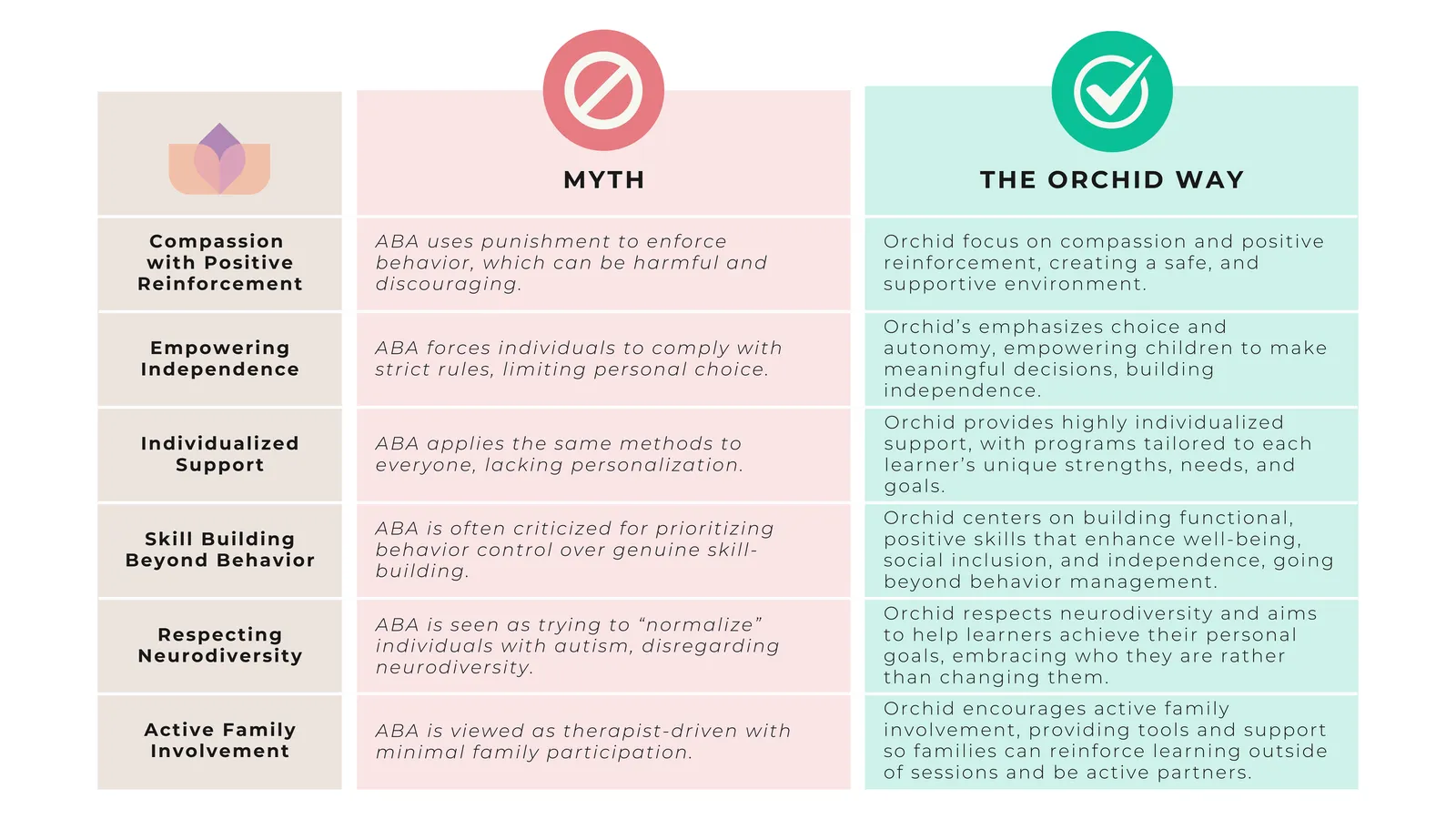
What ABA is NOT: Debunking Myths about ABA Therapy
ABA (Applied Behavior Analysis) therapy has evolved significantly over the years, yet some misconceptions persist. At Orchid, we understand that many families have questions and concerns based on outdated or inaccurate views of ABA. This chart highlights common myths and contrasts them with the compassionate, individualized approach we follow, known as "The Orchid Way." By focusing on positive reinforcement, respecting each learner's uniqueness, and involving families at every step, our mission is to support meaningful growth and independence in a safe, supportive environment.
Orchid Academy Programs

Full-Time
Dive into our Full-Day Program for an immersive educational experience designed to maximize learning and development through intensive support and a broad curriculum, accelerating progress toward transformative outcomes.

Part-Time
The perfect starting point for families new to our approach, offering a flexible educational experience. As families witness the life-changing outcomes, many choose to transition to our Full-Day Program, confident in the greater benefits that await.

In-Home
Ideal for clients beginning their journey with us, our In-Home/Community Services provide a comfortable and familiar setting to start building foundational skills. Tailored to each learner's individual needs, this option focuses on direct skill development.
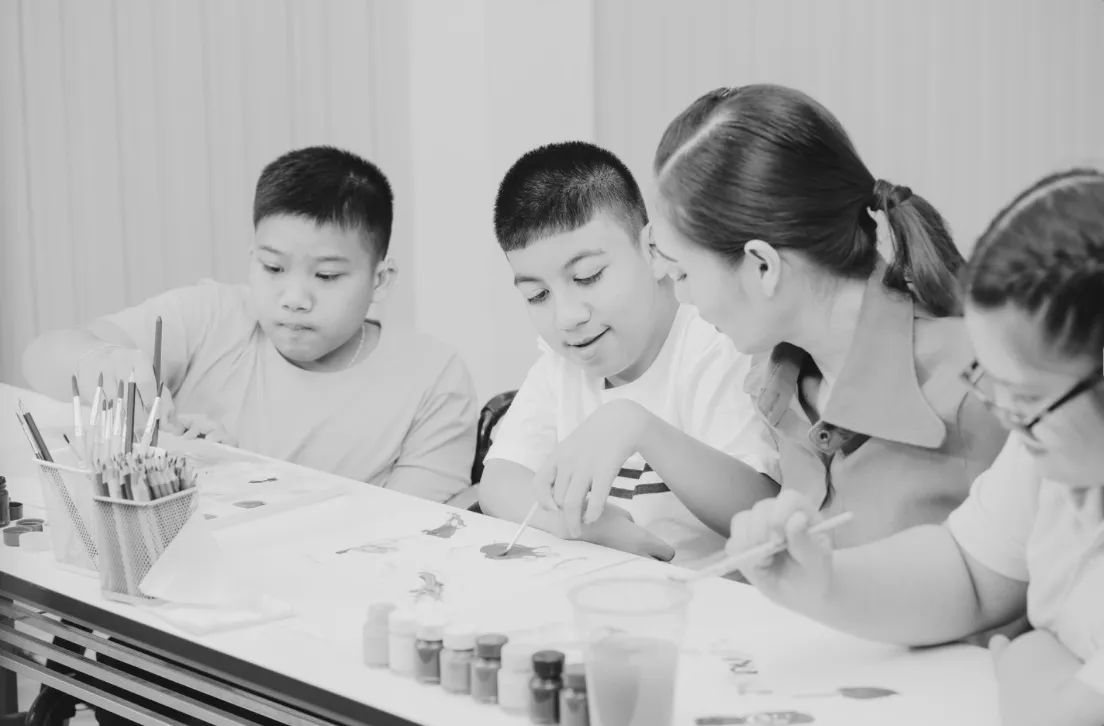
After School
Enrich your child's after-school hours with our program focusing on social skills, academic support, and recreational activities, fostering a well-rounded development in a structured yet fun environment.
Where Orchid Academy Offers ABA Therapy in Washington
Explore related services & family guides
ABA is the core of Orchid's care, and these pages help families match the right program, setting, and next step.
- Early intervention
Intensive support for young children building foundational skills.
- Parent & family training
Coaching so skills transfer from session to home.
- Social skills groups
Guided group practice for connection and communication.
- Occupational & speech therapy
Related therapies integrated into ABA programs.
- ABA therapy in Issaquah
Maple Street Academy's BCBA-supervised, school-readiness setting.
- Understanding autism
Early signs, diagnosis paths, and what autism is not.
- Insurance coverage
Carriers, authorizations, and what plans usually cover.
Insurance Orchid Academy Accepts for ABA Therapy
Orchid Academy is in network with Premera Blue Cross, Regence, Blue Cross Blue Shield, Cigna, Aetna, Medicaid (Washington Apple Health), Molina Healthcare, Asuris Northwest Health, Personify Health, TRICARE.
Not sure if your plan is covered? Our team is happy to verify your benefits and explain your coverage before services begin - at no cost to you!
We know insurance can feel overwhelming. Our team will verify your benefits, answer your questions, and help you understand your coverage before services begin.
Verify My Insurance →Call (425) 699-7164 to check your plan, or compare carriers in the insurance guide.




Insurance participation varies by location and individual plan. Contact our team to confirm your specific benefits at hope@orchidacademy.com.
Start ABA Therapy with Orchid Academy
Find out how our expert team can support your child's journey:
Request received
A member of the Orchid Academy care team will call you back within 24 hours to talk through next steps. Prefer to talk now?
Call (425) 699-7164