
5 Things to Bring to an IEP Meeting

These are the things I brought (or wished I had brought) as a special education teacher sitting on the other side of the table, and later as a parent advocate. Walk in prepared; leave knowing what was decided.
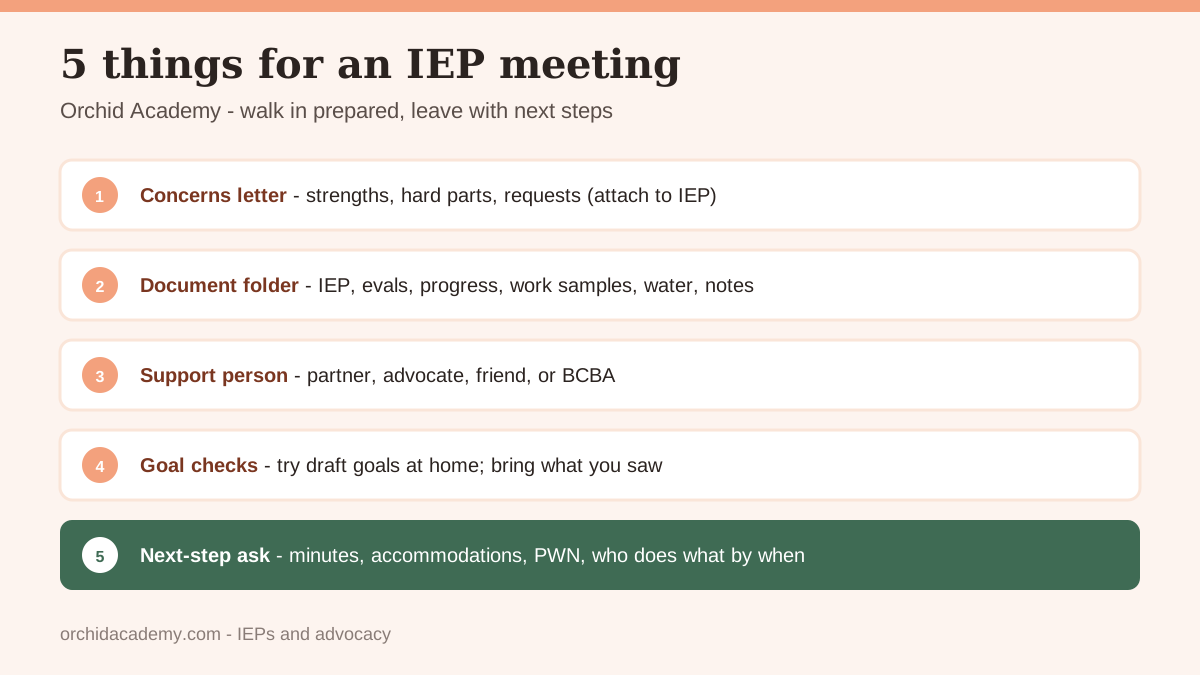
1. A short parent concerns letter
Write one page: strengths, what is hard at home and school, what you want discussed, and any requests (eval, service change, accommodation). Ask that it be attached to the IEP. Send it a few days ahead when you can. Understood.org and most advocate checklists put this near the top for a reason: it keeps your priorities on the record even if the meeting runs long.
2. Your documents in one folder
Current IEP (if you have one), recent progress reports, evaluations, work samples, behavior data, outside therapy notes, and a list of questions. Bring water and a notebook. You will talk more than you think.
3. A support person
Grandparent, partner, friend, advocate, or your BCBA. School teams can fill a room. Another adult next to you helps you hear what was said, take notes, and stay steady when the meeting gets technical. Authorize your BCBA to attend if ABA goals need to line up with the IEP.
4. Homework on the draft goals
If the draft says your child will name 24 of 27 letters, try the skill at home with the same materials the school uses when you can. Write down what you saw. Different results are useful data (“At home she named 12 with flashcards; school reports 24”). That is collaboration, not a gotcha.
5. A clear next-step ask
Know what “done” looks like for you: services minutes, accommodation language, Prior Written Notice on a denial, or a follow-up date. You know your child best. Experts around the table bring assessments; you bring daily life. End by confirming who does what by when.
Optional goodwill gesture if it fits your style: a small breakfast item for a early morning meeting. Relationships help. Documents and clarity help more.
For section-by-section IEP language, read IEP sections explained. For the full process, use the Washington IEP guide. Contact Orchid if you want a BCBA at the table with you.
A one-page concerns letter
Keep it to one page. Use headings the team already knows:
- Strengths: three specifics, not “he’s sweet”
- Home: sleep, safety, communication, what mornings look like
- School: what you see in work coming home, what teachers have said, what is missing
- Asks: numbered. “1. Evaluate reading. 2. Add a break cue. 3. Put today’s decisions in Prior Written Notice.”
Send it by email a few days ahead and bring paper copies. Ask that it be attached to the IEP. If they forget, follow up the same day: “Please confirm the 4/12 parent concerns letter is in the file.”
More on the rights behind that ask: your rights in the IEP process.
After the meeting, before you forget
That night, write down: who does what by when, what you agreed to, and what you still dispute. If a denial happened, ask for Prior Written Notice in writing if you did not walk out with it.
Put the next date on your calendar the same evening: progress check, follow-up meeting, or the annual review. Meetings that end with “we’ll be in touch” are how a year disappears.
If the draft goals were wrong, you do not have to sign that night. Take the document home. Compare it to the notes. Send a short email with corrections.
Frequently asked questions
Can I bring an advocate or a BCBA? Yes. Tell the district ahead so they plan time. Authorize the BCBA in writing if they will see student records.
What if I cry or go blank? That is why the support person and the concerns letter exist. The letter talks when you cannot. The other adult writes down the numbers.
Do I need a binder or is a folder enough? A folder with the current IEP, last eval, last progress report, and your letter is enough. Bring specific asks.
What if they say there is not enough time to cover my list? Ask which items will be tabled, and schedule the follow-up before you stand up. Then ask for PWN on anything they refused today.
Find out how our expert team can support your child’s journey:
Dr. Autumn Flick, BCBA
Board Certified Behavior Analyst
Keep exploring
- Washington IEP guide
Prepare for the meeting with a full process overview.
- School-based ABA services
How Orchid partners with schools and supports IEP goals.
- School readiness program
Preparing autistic children for classroom routines and group learning.
Related Articles

Your Rights in the IEP Process: A Parent's Guide
IEP parent rights in Washington: request meetings in writing, 35-day eval timeline vs district clocks, school and clinic ABA in the same week, and bringing a BCBA.
Aug 21, 2026 · 5 min read

IEP Sections Explained: What to Check in Each Section
IEP sections explained, with a practical parent checklist for present levels, goals, services, accommodations, LRE, progress reports, transition, and Prior Written Notice.
Mar 21, 2025 · 9 min read