
A Guide to Trick-or-Treating for Kids with Autism
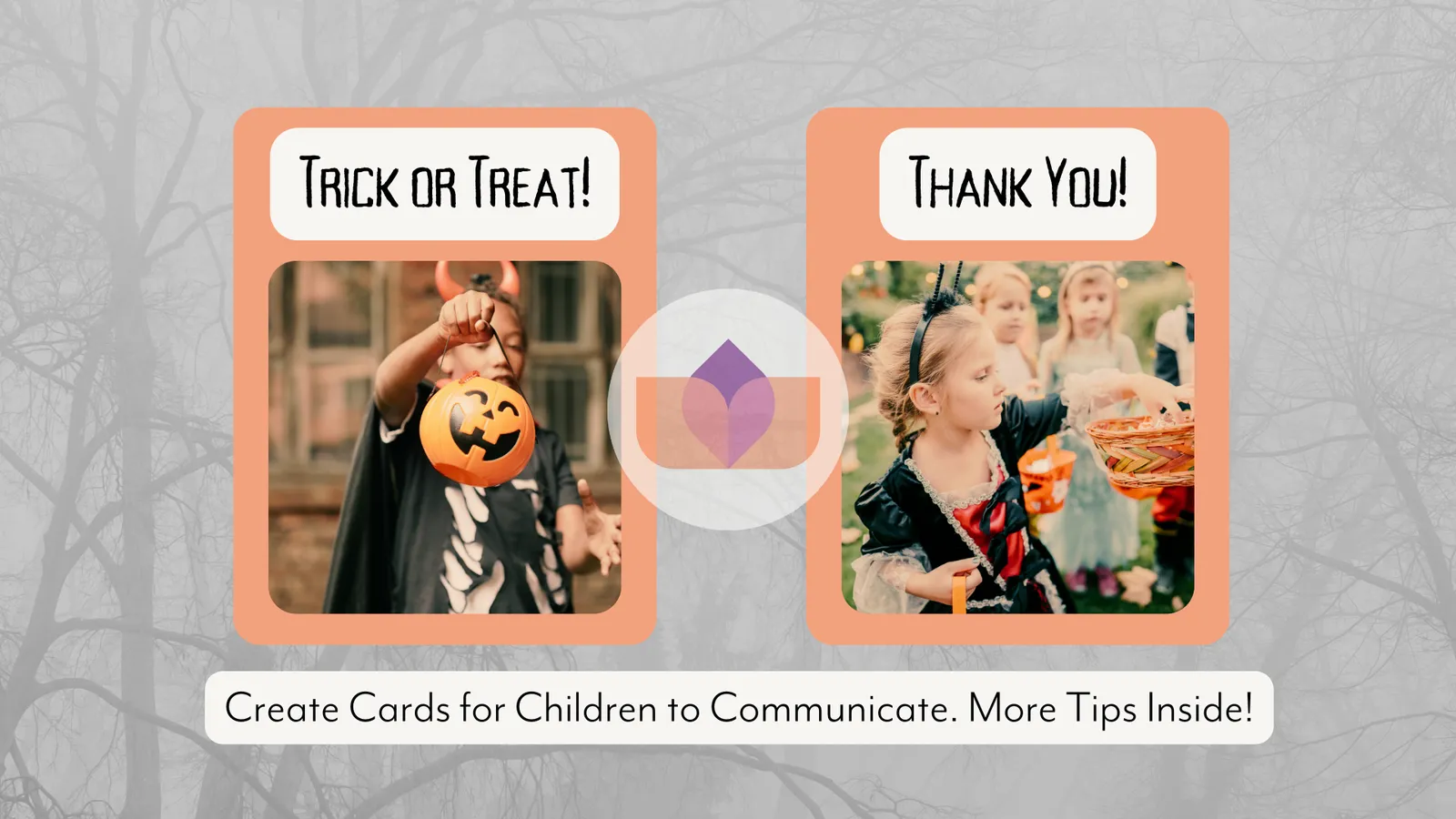
If Halloween made your holiday priority list, break trick-or-treating into skills and practice them before October 31. Neighborhood route, trunk-or-treat, or hallway candy at home all count.
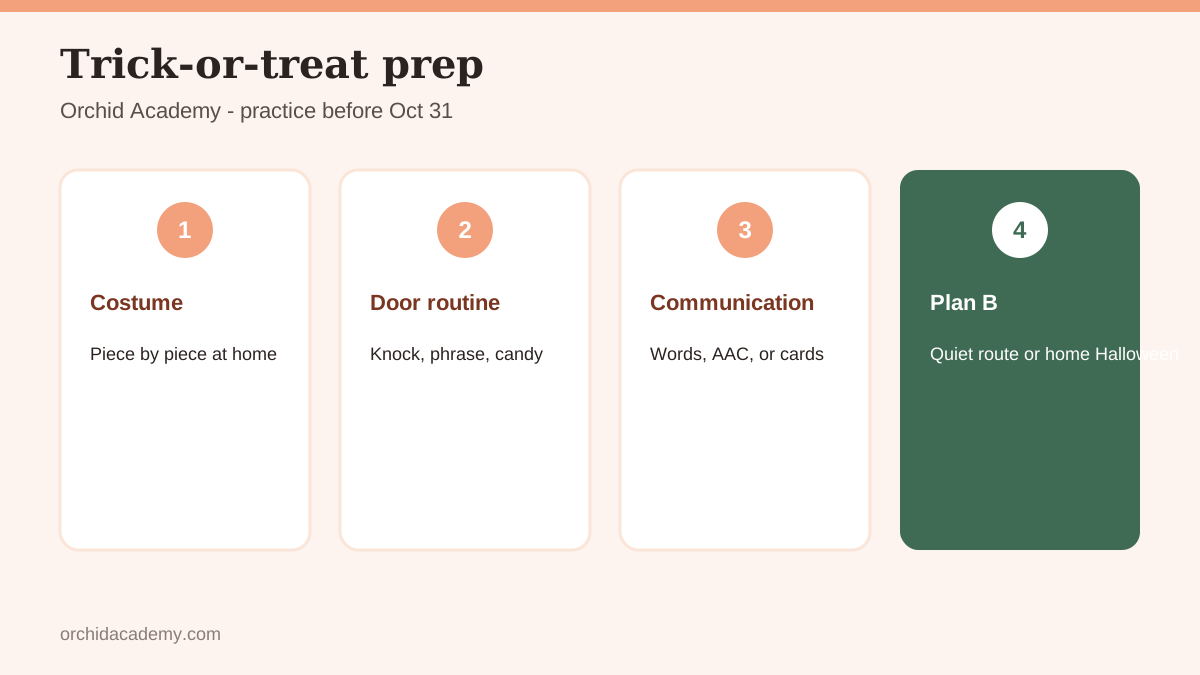
1. Costume tolerance
Start with one piece (hat, cape) for short wears at home. Add the main outfit during preferred activities. Leave masks for last or skip them for face paint. Photo + social story: “We wear costumes on Halloween.”
2. House-to-house routine
Role-play at home (knock, phrase, candy). Practice walking between doors in your neighborhood. Do a mini run at a familiar house days early.
First-then board: walk → knock → “trick or treat” → candy.
3. Communication
Verbal kids: practice the phrase with praise. AAC / PECS / cards: 2x2 laminated “Trick or Treat” and “Thank You” on a wristband or costume Velcro. Wave or “hi” is enough if the full phrase is too hard.
4. Social extras
Thank-you after candy. Simple response to costume compliments (smile, wave, device phrase).
5. Sensory Plan B
Quieter streets, headphones, comfort item, break cue. If the night is too much: room-to-room candy at home or a Halloween movie. That still counts.
6. Candy after
Sort together. Exchange non-preferred candy for a preferred treat or toy if diet or preference requires it. Same routine every practice night.
7. Visibility and tracking
Glow sticks, reflective tape, or small LEDs on bag/costume. Optional AirTag/Tile on bag; test it before the night. Comfort check anything that touches skin.
Checklist
Costume practiced · door routine practiced · communication ready · break plan · candy sort routine · visible in the dark · tracker tested if you use one.
Ask your BCBA to run costume and door practice in session. Contact Orchid if you want a short Halloween plan built with your team.
Find out how our expert team can support your child’s journey:
Dr. Autumn Flick, BCBA
Board Certified Behavior Analyst
Keep exploring
- Parent & family training
Coaching that fits your family's routines and goals.
- ABA therapy at Orchid Academy
How we build communication, independence, and daily living skills.
- Request a call back
Ask about programs that match your child's needs.
Related Articles

How Storytelling Supports Literacy and Learning for Children
How shared storytelling builds vocabulary, sequencing, and social understanding for autistic kids—and how to use personalized stories alongside ABA goals at home.
Aug 22, 2026 · 4 min read

Picky Eaters with Autism: Embracing Mealtime with Compassion
Why picky eating is common in autism, and concrete steps for introducing new foods without turning dinner into a fight.
Feb 2, 2025 · 2 min read
An Example Toilet Training Plan for Children with Autism
A phase-by-phase toilet training plan for autistic children: scheduled trips, communication prompts, accident response, and how to fade support.
Feb 23, 2025 · 2 min read