
Holiday Travel Tips for Families with an Autistic Child
Holiday travel stacks new people, new places, and a broken routine. Aim for a trip your child can get through with tools you already practiced.
Practice before the travel day
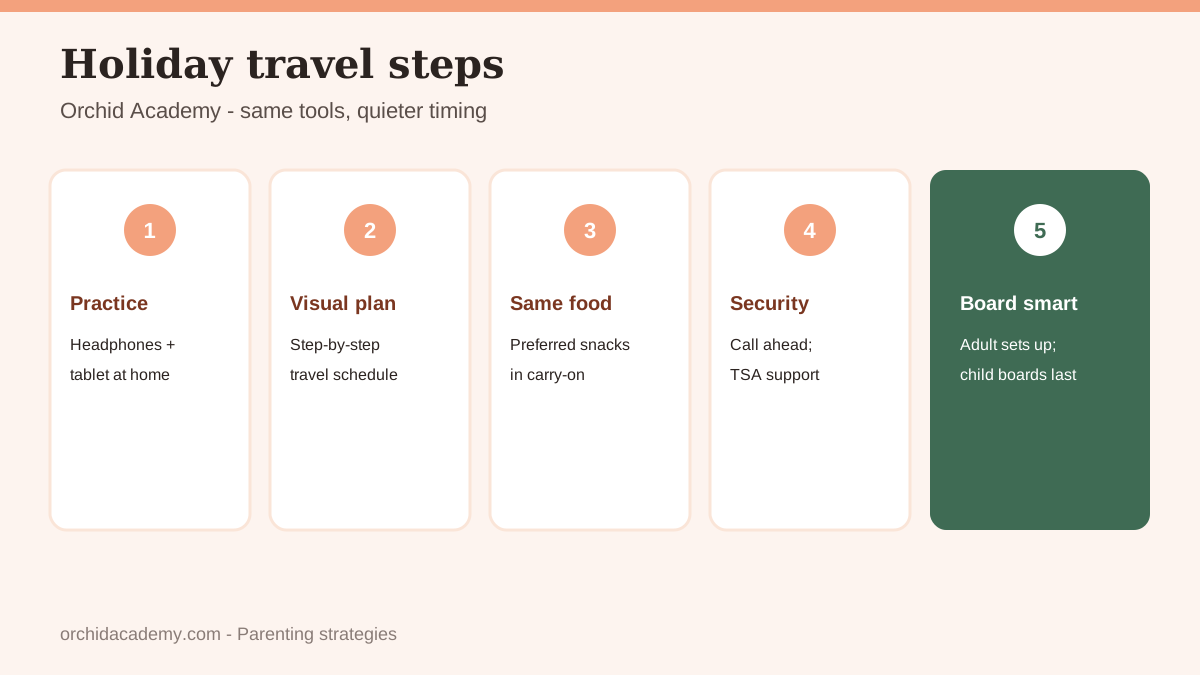
- Wear headphones with the tablet or music you will use on the plane.
- Practice any sensory blanket or lap pad in the car first.
- If you can, visit a flight museum or airport observation area so planes are not brand new on departure day.
- Ask your BCBA for a visual travel schedule and a short social story. That is fair work for parent training.
Pack for sameness
Comfort item in the carry-on. Familiar snacks, not “they can try airport pizza.” Same water bottle if that matters. Keep the kit where you can reach it in security and at the gate.
Time and security
Travel off-peak when you can. Call the airport or airline about support for passengers with autism (TSA Cares in the U.S. is one starting point many families use). Tell the flight crew what helps before boarding.
If two adults are traveling, send one ahead to set up seats and the tablet while the other boards last with the child. That order alone prevents a lot of gate meltdowns.
After you land
Keep snack, quiet, and bedtime anchors as close to home as you can. For the gathering at the other end, use holiday gathering prep. For a fuller summer trip checklist, see summer travel.
We hear from families who never traveled before services and later send photos from trips that worked. What changed was usually practice and a plan. Contact Orchid if you want help building one.
Airports and TSA
TSA Cares is a free helpline (TSA Cares) that can arrange extra time and a quieter screening path when you call 72 hours ahead. Tell them you are traveling with an autistic passenger. Bring the same comfort items you practiced. If a device or AAC is in the bin, say so before it disappears down the belt.
Airline disability desks can add a note to the reservation: extra time to board, a bulkhead if that helps, or a warning not to touch the child without asking. Call the desk. The gate agent will not invent this on the day.
If your child will not walk the jetway, practice a “first-then” (walk, then tablet) at home and at the grocery store first. The airport is a terrible place to teach walking in line from scratch.
Car trips are still travel
Long drives stack the same problems as flights: hunger, noise, and no exit. Pack the identical snack set. Plan stops you can leave quickly (a rest area with a bathroom, not a crowded restaurant as the only option). Headphones and a downloaded show beat a streaming plan that dies in the mountains.
If two adults are in the car, agree in advance who handles driving and who handles the child when things go sideways. Decide that before you get on I-90.
The destination is the second trip
The gathering on the other end has its own sensory load: new beds, new smells, relatives who hug first and ask later. Use holiday gathering prep: a quiet room, an exit rule, and a 20-minute definition of success.
Tell the host one paragraph, in writing: what helps, what to skip (surprise hats, fireworks, “just try it”), and when you will leave. Send it so they are not shocked when you walk out.
Keep bedtime within an hour of home if you can. A ruined second day is often a late first night.
Frequently asked questions
Should we skip travel this year? If it is not on your holiday priority list, skip it. Video calls exist. Relatives can visit you on a day you control.
What about earplugs versus headphones? Use whatever your child will wear in practice. Noise-canceling headphones are easier for most kids we see than foam plugs they can spit out. Test them on a noisy car ride first.
Do we tell the whole plane? Tell the crew. You do not owe a speech to row 14. A short “he may vocalize, we have it” to the flight attendant is enough.
Can ABA sessions target travel skills? Yes: waiting, wearing headphones, sitting with a belt, using a toilet that is not yours. Ask for a short travel block on the calendar four to six weeks out, not the night before.
See how our team can support your child
Dr. Autumn Flick, BCBA
Board Certified Behavior Analyst
Keep exploring
- Parent & family training
Coaching that fits your family's routines and goals.
- ABA therapy at Orchid Academy
How we build communication, independence, and daily living skills.
- Request a call back
Ask about programs that match your child's needs.
Related Articles
Social Skills for Teens With Autism: Friendships, Boundaries, and Real-Life Practice
Practical, age-respectful social skills for autistic teens: friendships, group chats, boundaries, self-advocacy, and ways to practice without forced masking.
Sep 22, 2026 · 3 min read

How Storytelling Supports Literacy and Learning for Children
How shared storytelling builds vocabulary, sequencing, and social understanding for autistic kids, and how to use personalized stories alongside ABA goals at home.
Aug 22, 2026 · 4 min read

Picky Eaters with Autism: Embracing Mealtime with Compassion
Why picky eating is common in autism, and concrete steps for introducing new foods without turning dinner into a fight.
Feb 2, 2025 · 2 min read