
An Example Toilet Training Plan for Children with Autism
I once toilet-trained a preschooler who was the only one still in diapers. One bite of orange seemed to turn into a flood of accidents, and I went home smelling like pee after scrubbing nap mats and tiny chairs. We stuck to the plan. That child later spent most of the day in a general education classroom. Toilet training is hard. A clear, compassionate plan makes it doable.
If you are still checking readiness, start with Is your child ready for toilet training?. This post assumes you are ready to run a structured routine.
Goal: what we are working toward
Toilet training is a stack of smaller skills. First goal: voiding (peeing) in the toilet.
If sitting is already hard, stacking pants, flush, and handwashing on day one can make the toilet aversive. Get success first. Build the rest after.
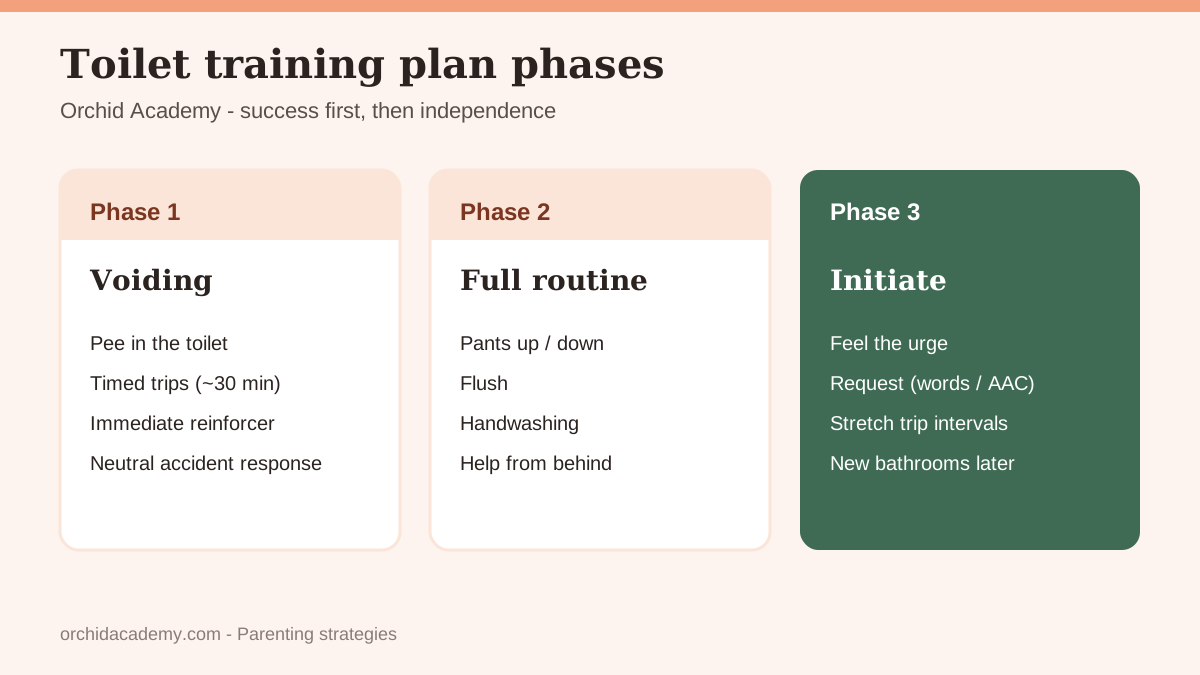
Phases usually look like:
- Voiding in the toilet
- Full bathroom routine (pants, flush, wash)
- Initiating (recognize the urge; request with words, signs, or AAC)
Set up before the first timed trip
- Increase fluids every 5–10 minutes so there are more practice chances. A preferred water bottle helps.
- Save the strongest reinforcers for successful toilet trips (tiny edible or top toy).
- Prime often: “If you need to go potty, you can ask.” “First bathroom, then reward.”
- Use a visual schedule or social story so the steps are predictable.
The routine
- Underwear with a pull-up over it at the start so the child feels wetness while accidents are still contained.
- Scheduled trips about every 30 minutes. “It’s time to go potty.” If the child says no, ask “Are you dry?” If yes, teach “more time” or “later.” If wet, treat it as an accident and go change.
- Practice requesting at the bathroom door with the same modality you use elsewhere: short phrase, AAC icon, or sign.
- Help with clothing and handwashing as much as needed at first. Stand behind the child so they see their own hands doing the steps. If handwashing is a fight, temporary baby wipes can reduce the load until toileting is solid.
- Sit about one minute with a short preferred activity. Praise dry underwear. If wet, stay neutral: “You’re wet. First we stay dry, then we get our rewards.”
- Reinforce success immediately for voiding in the toilet. Moderate praise for sitting without voiding. After a win, drop extra demands for a few minutes so the reinforcer actually lands.
- Accidents stay neutral. “You’re wet. Let’s go to the bathroom.” Finish the routine. No shame, no lectures. Accidents are data, not defiance.
Fade support
- Stretch the interval: 30 minutes → 45 → 60+.
- Shift from scheduled trips toward child-initiated requests.
- Move from immediate rewards to sticker charts or delayed privileges once the contingency is clear.
- Practice in new bathrooms once home success is stable.
Make it yours
Every plan should match the child’s sensory profile, communication system, and your family’s bandwidth. Orchid BCBAs customize this with you. Request a call back or ask your current BCBA to adapt the schedule, reinforcers, and data sheet for your child.
Find out how our expert team can support your child’s journey:
Dr. Autumn Flick, BCBA
Board Certified Behavior Analyst
Keep exploring
- Parent & family training
Coaching that fits your family's routines and goals.
- ABA therapy at Orchid Academy
How we build communication, independence, and daily living skills.
- Request a call back
Ask about programs that match your child's needs.
Related Articles

How Storytelling Supports Literacy and Learning for Children
How shared storytelling builds vocabulary, sequencing, and social understanding for autistic kids—and how to use personalized stories alongside ABA goals at home.
Aug 22, 2026 · 4 min read

Picky Eaters with Autism: Embracing Mealtime with Compassion
Why picky eating is common in autism, and concrete steps for introducing new foods without turning dinner into a fight.
Feb 2, 2025 · 2 min read

Is Your Child with Autism Ready for Toilet Training?
How to tell whether your autistic child is ready for toilet training, why the diaper-to-toilet shift is hard, and what to put in place before you start.
Feb 23, 2025 · 3 min read