
Is Your Child with Autism Ready for Toilet Training?

Toilet training is a major milestone, and for many autistic children it takes longer than the parenting books suggest. After 20 years of this work, I can tell you some kids pick it up in weeks and others need months. Both are normal. The plan has to match the child, the family, and actual readiness, not a preschool deadline.
Childcare centers and programs often require toileting. Families get stuck hunting for care because their child is not fully trained yet. That pressure is real. A structured approach with the right support helps many children get there; timelines still vary widely.
Why toilet training is harder for many autistic kids
Toilet training means unlearning a habit that has been true since birth: pee goes in a diaper. Then adults suddenly say it goes in the toilet. Concrete thinkers can feel like they are doing something wrong the first times they void in the toilet.
Consistency is often a strength. Changing the elimination routine removes that predictability, so resistance shows up. Sensory load piles on: flush noise, cold seat, wet underwear after warm diapers. Some kids hold pee or poop to avoid accidents, which creates discomfort and more avoidance.
Compassion is the starting point. If you can see the shift from their side, you can build steps that feel safe instead of forcing a full routine on day one.
Readiness signs
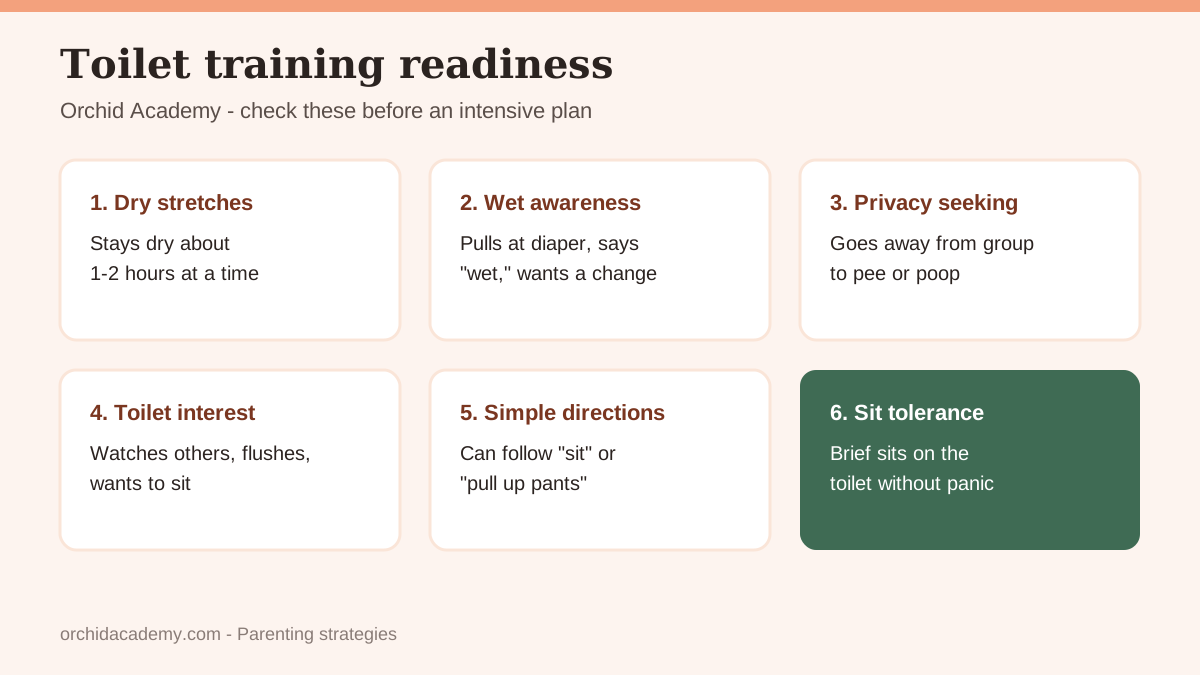
Every child is different. Common signs include:
- Staying dry for longer stretches (about 1–2 hours)
- Awareness of wet or soiled diapers (pulling at the diaper, saying “wet,” trying to remove it)
- Going away from the group to eliminate (hiding behind furniture or in another room)
- Interest in the toilet (watching siblings, flushing, wanting to sit)
- Following simple instructions (“sit down,” “pull up your pants”)
- Tolerating sitting on the toilet, even briefly
Missing several of these does not mean “never.” It means build readiness first: tolerate the bathroom, sit briefly with a preferred activity, practice first-then with other skills. How to ABA and similar clinical guides also look for bladder control (dry for hours, emptying all at once) and a basic first-then understanding before an intensive program.
Planning for success
Start with voiding (peeing). Bowel movements often take longer. One skill at a time keeps the toilet from becoming aversive.
Choose where to start. Some families get traction faster in a structured clinic or classroom, then transfer home. Others start at home and clinic together. Home-only without consistent follow-through usually takes longer.
Use strong, immediate reinforcement. This is one of the few times I still recommend a tiny preferred edible at first (one M&M, gummy, cracker) because feedback has to be instant. Fade to toys, outside time, or a chart once the contingency is clear.
Make it a team effort. Parents, caregivers, and therapists need the same language and the same schedule. Mixed messages reset progress.
No punishment, no forcing. We shape tolerance in small steps. Progress over perfection.
Rough timeline (varies widely)
- Building tolerance (1–3 weeks): sitting, flushing, underwear practice
- Voiding success (often 4–8 weeks): peeing in the toilet consistently
- Eliminating: pooping on the toilet (often the longer phase)
- Initiating: going independently, requesting with words/pictures/AAC, wiping and handwashing
- Generalizing: new bathrooms and public restrooms
Initiation is its own skill. Many autistic children do not naturally signal when they need to go. We teach recognition, communication, and action on purpose.
Next step: a sample plan
Readiness is half the work. The companion post walks through a phase-by-phase toilet training plan (scheduled trips, communication at the door, accidents, fading). Ask your BCBA to customize it, or request a call back if you want Orchid’s help building one for your child.
Find out how our expert team can support your child’s journey:
Dr. Autumn Flick, BCBA
Board Certified Behavior Analyst
Keep exploring
- Parent & family training
Coaching that fits your family's routines and goals.
- ABA therapy at Orchid Academy
How we build communication, independence, and daily living skills.
- Request a call back
Ask about programs that match your child's needs.
Related Articles

How Storytelling Supports Literacy and Learning for Children
How shared storytelling builds vocabulary, sequencing, and social understanding for autistic kids—and how to use personalized stories alongside ABA goals at home.
Aug 22, 2026 · 4 min read

Picky Eaters with Autism: Embracing Mealtime with Compassion
Why picky eating is common in autism, and concrete steps for introducing new foods without turning dinner into a fight.
Feb 2, 2025 · 2 min read
An Example Toilet Training Plan for Children with Autism
A phase-by-phase toilet training plan for autistic children: scheduled trips, communication prompts, accident response, and how to fade support.
Feb 23, 2025 · 2 min read