
In-Academy vs. In-Home ABA Therapy: How to Choose

ABA can happen in an academy (clinic) setting or at home. Orchid offers both. Pick the setting that matches your child’s current goals, tolerance for structure, and your family’s logistics.
For how our program works overall, start with ABA therapy. This post is the setting comparison parents ask for when they are choosing a first placement or thinking about a switch.
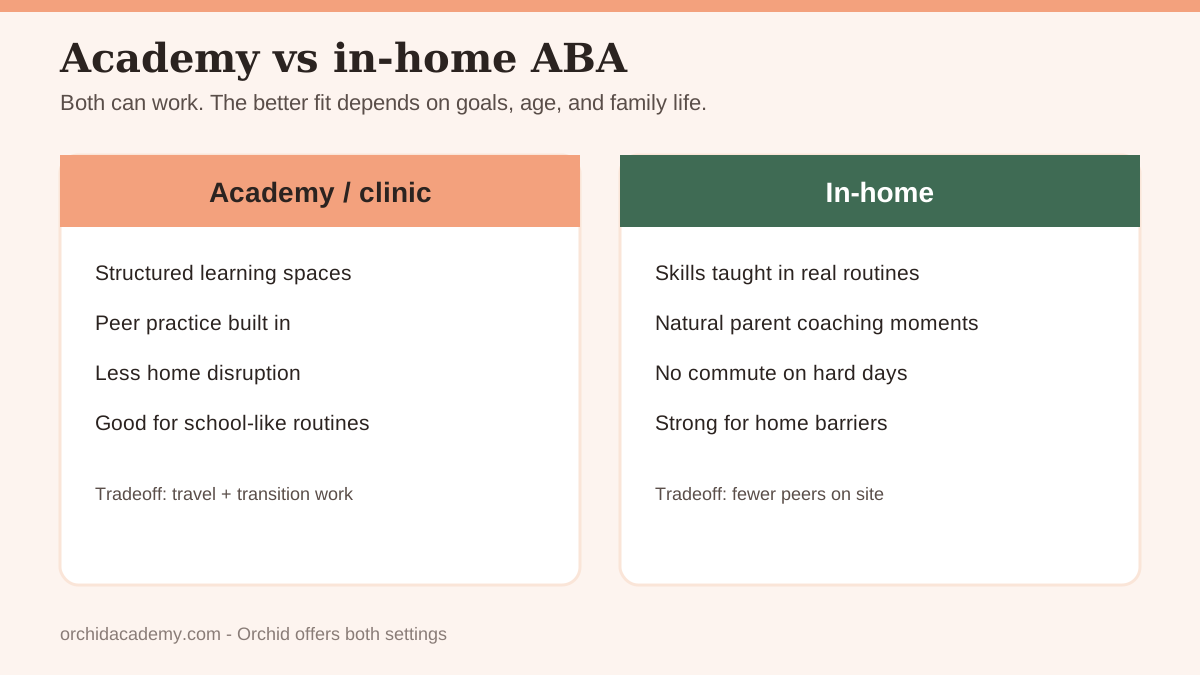
What each setting is good at
Academy / clinic ABA happens in a space built for teaching. Routines are predictable. Distractions like siblings, doorbells, and laundry piles are mostly out of the picture. Materials, sensory supports, and multiple therapy rooms are on site. Peers are available for supervised social practice. BCBAs and RBTs can consult in real time when a session needs a quick adjust.
That structure helps many early learners who are still building attention, communication, and learning-to-learn skills. A clinic day also keeps home as home, which some families need for rest and clear boundaries between therapy and family life.
In-home ABA happens in the environment where many skills have to work anyway: bathroom routines, mealtime, sibling conflict, bedtime transitions, packing a backpack. Therapists can coach caregivers in the moment with the child’s real toys, furniture, and schedule. For school-aged learners who already have foundational learning skills, home is often where independence and generalization goals belong.
Home can be noisier and less controlled. That is not automatically a flaw. If the goal is toilet training in your bathroom or handling a meltdown before school, the home is the right classroom.
Honest tradeoffs
| Factor | Academy | In-home |
|---|---|---|
| Structure and distractions | More controlled; easier to protect teaching time | More natural; more competing stimuli |
| Peers | Easier access to peer practice and group work | Peer opportunities usually need to be arranged elsewhere |
| Materials and space | Broader on-site tools and rooms | Limited to what fits the home |
| Caregiver coaching | Strong with planned parent training; less “live” during the full day | High opportunity to practice strategies in real routines |
| Generalization | Must be planned intentionally to home and school | Strong for home routines; still needs planning for school and community |
| Family logistics | Travel and drop-off; home stays a rest space | No commute; sessions occupy home space and schedule |
Generalization does not happen automatically in either setting. A clinic that never plans for home and school transfer will leave skills stuck in the therapy room. A home program that never practices with new people or new places can leave skills stuck in the living room. Quality of programming matters more than the building.
Staffing quality also matters in both models. Academy settings often make same-day BCBA consultation easier because the team is under one roof. Strong in-home programs still bring BCBA oversight, parent training, and clear data. Ask how supervision works either way.
How families often choose
There is no strict age cutoff, but patterns show up in practice:
- Younger children building foundational communication, play, and learning readiness often do well in academy programming because structure and peer access line up with those goals.
- School-aged children working on daily living, family routines, and carrying skills into real life often do well with in-home support, sometimes after an academy foundation.
- Some families use a hybrid or move from academy to home (or the reverse) as goals change. Setting is a clinical decision you can revisit, not a lifelong label.
Practical filters help too. Can you travel consistently? Does your child learn better with fewer home distractions, or do they shut down in unfamiliar spaces? Are social goals primary right now? Is caregiver coaching during real routines the main need?
What I tell parents at Orchid
Do not pick a setting because a blog called one “gold standard.” Pick the one your BCBA can defend against this child’s assessment, then review it when life or goals shift. Orchid runs academies and in-home care because both are legitimate tools. We will not talk you into the model that is convenient for us if another fit is clearer.
Compare Orchid locations (including academy and in-home options by area), or request a call back to talk through fit. For program details beyond setting, return to ABA therapy.
Find out how our expert team can support your child’s journey:
Dr. Autumn Flick, BCBA
Board Certified Behavior Analyst
Keep exploring
- Compare Orchid locations
In-academy clinics, school partnerships, and in-home ABA across the Eastside.
- Bellevue in-home ABA
In-home care serving Bellevue, Renton, Newcastle, Mercer Island, and Factoria.
- ABA therapy at Orchid Academy
Evidence-based autism therapy across our academies, homes, and schools.
Related Articles
ABA Therapy for Teens: What Age-Respectful Care Looks Like
ABA therapy for teens should focus on useful goals, real choice, privacy, school, and adult life. Learn what to ask before choosing a provider.
Sep 9, 2026 · 8 min read
How to Switch ABA Providers Without Losing Momentum
How to switch ABA providers: line up care, handle insurance, transfer records, and ask for a written handoff without creating an avoidable gap.
Sep 9, 2026 · 7 min read
ABA Programs in Sammamish, WA: School-Based and In-Home Options
Looking for ABA programs in Sammamish, WA? Compare Orchid Academy's school-based support at Sammamish Children's School with in-home ABA, insurance, and what to ask on the first call.
Aug 28, 2026 · 6 min read