
Preventing Autism Meltdowns During Challenging Times

When the power goes out, travel plans collapse, or a school day gets canceled, routine disappears. For autistic kids, that often means rising anxiety and a higher chance of meltdown. Your job in that window is prevention, not a teachable moment about grit.
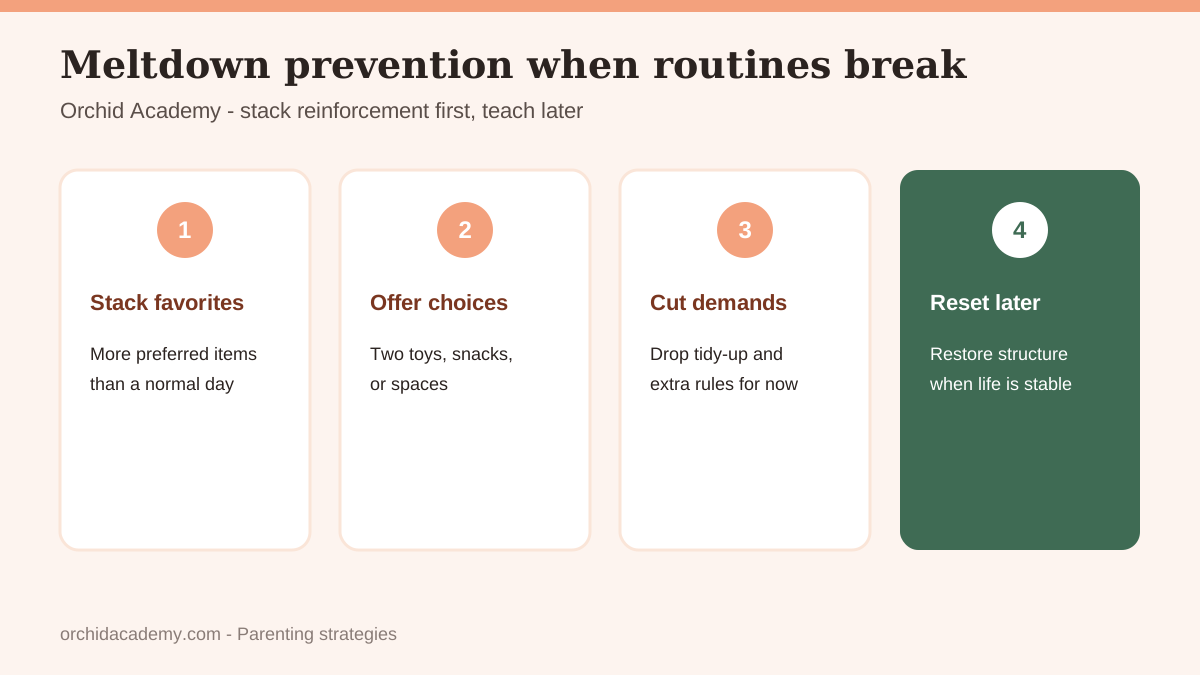
Parents sometimes worry that “giving in” will reinforce problem behavior. During a disruption, meltdowns do not teach resilience. They add stress on top of an already hard day. Stack preferred items and cut demands first. Rebuild structure when life is stable again.
Ask the prevention questions
- What would make today feel like a win for my child at home?
- What would it take to get through this day with as few meltdowns as possible?
If the honest answer is “every favorite toy out and zero chore lists,” that is information. Mess can wait. Regulation cannot.
Stack reinforcement early
- Pull out more favorites than usual. Trains, bubbles, sensory bins, Legos, preferred shows. One preferred item is often not enough when the environment already feels wrong.
- Create easy access. Scatter activities around so your child can move between them without asking for permission every two minutes.
- Offer choices. Two toys, two snacks, two rooms. Control is scarce during a disruption; choices put some of it back.
- Drop the usual rules for now. Screen limits, tidy-up demands, and “use your words” drills can wait until power, schedule, or travel is back to normal.
This is the same idea we use in power outage prep: preferred items early, short language, keep only the anchors that still work (snack, quiet time, bedtime ritual).
What this is not
Stacking reinforcement during a crisis is not the long-term behavior plan. It is first aid. When the disruption ends, return to your usual expectations with your BCBA’s help if needed. If meltdowns keep showing up even on ordinary days, that is a programming question, not a “spoil them forever” question. See also public meltdown steps for in-the-moment moves outside the house.
Reach out to your BCBA or contact Orchid if you want a family-specific disruption plan before the next storm, trip, or schedule change.
See how our team can support your child
Dr. Autumn Flick, BCBA
Board Certified Behavior Analyst
Keep exploring
- Parent & family training
Coaching that fits your family's routines and goals.
- ABA therapy at Orchid Academy
How we build communication, independence, and daily living skills.
- Request a call back
Ask about programs that match your child's needs.
Related Articles
Social Skills for Teens With Autism: Friendships, Boundaries, and Real-Life Practice
Practical, age-respectful social skills for autistic teens: friendships, group chats, boundaries, self-advocacy, and ways to practice without forced masking.
Sep 22, 2026 · 3 min read

How Storytelling Supports Literacy and Learning for Children
How shared storytelling builds vocabulary, sequencing, and social understanding for autistic kids, and how to use personalized stories alongside ABA goals at home.
Aug 22, 2026 · 4 min read

Picky Eaters with Autism: Embracing Mealtime with Compassion
Why picky eating is common in autism, and concrete steps for introducing new foods without turning dinner into a fight.
Feb 2, 2025 · 2 min read