
How to Compare Insurance Plans When You Need ABA

If your family can choose a health plan during open enrollment, ABA needs to be part of the comparison—not an afterthought once a new card arrives. There is no universally “best” plan. The better choice is the one whose network, coverage rules, and costs fit your child’s actual care needs and your household budget.
If you cannot choose or switch plans, skip this comparison and use our ABA insurance process guide to verify the plan you have.
Compare the plan, not the carrier name
Two plans sold under the same carrier can have different networks, deductibles, prior-authorization rules, and benefits. Avoid choosing a plan based on a story from another family or a plan summary alone. Ask questions about the exact plan name, employer group if applicable, and plan year.
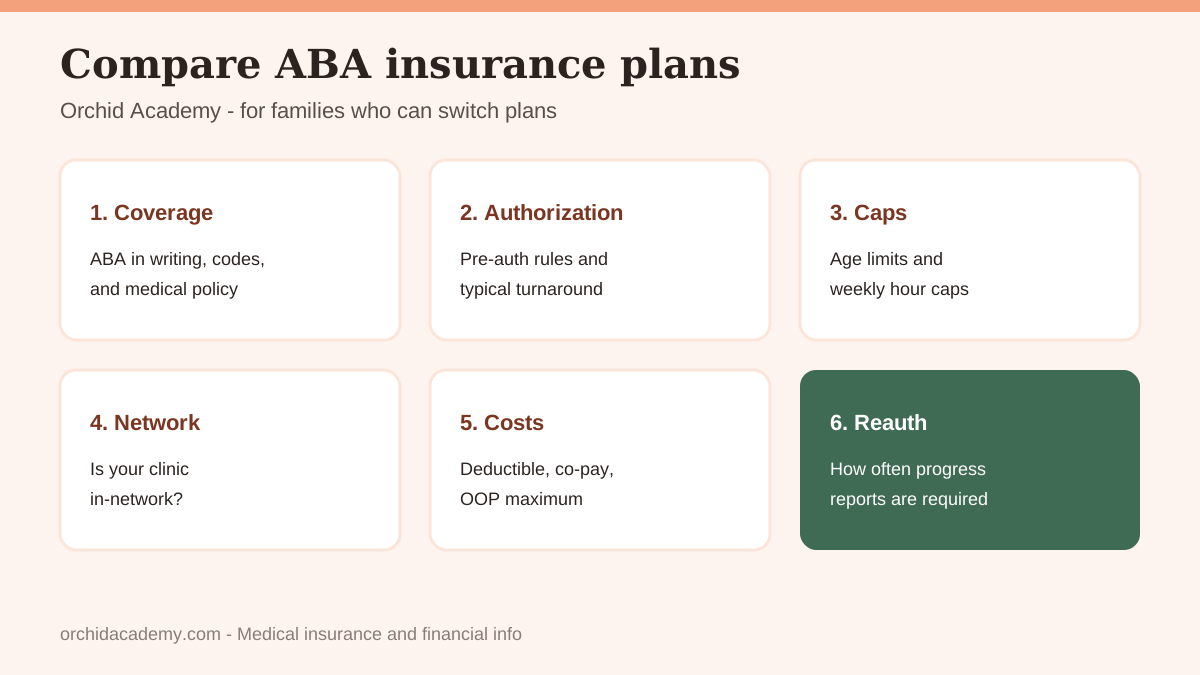
Use this one-page comparison for every option:
| What to compare | What to ask | Why it matters for ABA |
|---|---|---|
| Network | Is our preferred provider in network for ABA or adaptive-behavior services? | An out-of-network provider can change your share of the cost or require a different approval path. |
| Covered service | Is ABA covered, and does the plan use a specific benefit or medical-policy term? | The answer tells you which department and documents to ask for next. |
| Authorization | Is prior authorization needed for assessment, treatment, or both? | Assessment approval and treatment approval can be separate steps. |
| Cost sharing | What are the deductible, copay, coinsurance, and out-of-pocket maximum? | Premium is only one part of the annual cost. |
| Review cycle | Does the plan set an approval period or require periodic review? | You can calendar a renewal conversation before an authorization ends. |
| Transition rules | If care is already underway, is transition-of-care help available? | A new plan may have a process for an active treatment relationship. |
The federal Marketplace glossary provides neutral definitions of deductible, coinsurance, and prior authorization. Our ABA insurance terms guide puts those definitions into an ABA intake conversation.
Do not compare only the monthly premium
A lower premium can come with a higher deductible or a narrower network. A higher premium can still be the better annual value for one household, but only after you compare the full cost picture.
For each plan, write down:
- Monthly premium paid by your household
- Individual and family deductible
- Copay or coinsurance for relevant covered services
- Individual and family out-of-pocket maximum
- Whether the provider and required specialists are in network
- The plan year and whether deductible spending resets before or during care
Do not try to estimate a final bill from a generic session price online. The allowed amount, covered service, plan design, and authorization decision can all affect what you owe. Ask the plan for the applicable benefit information and ask the provider to verify benefits before you commit.
Call before you enroll
Call the member-services number if you already have a card, or use the prospective-member number listed with the plan option. You can say:
“I am comparing plans for my child. Can you confirm the ABA or adaptive-behavior benefit, whether this provider is in network, whether prior authorization is required for assessment and treatment, and what deductible, coinsurance, copay, and out-of-pocket maximum would apply?”
Write down the representative’s name, the date, and a call reference number. Ask for the answer through the portal or in writing. A phone conversation is useful, but plan documents control.
If care is already underway
Changing plans can create more than a billing question. Before you switch, ask the new plan about transition-of-care support, whether a current authorization transfers, and what it needs from the provider. Ask the provider what a plan change means for the schedule and whether they need a new referral, assessment, or authorization request.
If a plan denies a requested service, read the notice carefully and save it. Washington’s Office of the Insurance Commissioner explains the consumer appeal process and offers help for Washington residents. See the state’s denial-and-appeal guidance.
A practical decision rule
Choose the plan that you have confirmed can support the provider, service, and budget you expect—not the plan that sounds best in a carrier brochure. Then start a benefits check early. Our Washington ABA insurance guide covers Orchid’s current coverage information, and requesting a call back lets the team verify benefits for a specific intake.
Find out how our expert team can support your child’s journey:
Dr. Autumn Flick, BCBA
Board Certified Behavior Analyst
Keep exploring
- Full insurance coverage guide
Side-by-side carrier notes for Washington families.
- Verify your benefits with Orchid
Request a call back and we help families check coverage before care starts.
- ABA therapy at Orchid Academy
How sessions work, what children learn, and where we provide care.
Related Articles
ABA Therapy Billing Red Flags: What Federal Oversight Means for Your Family
ABA therapy billing red flags are in the news after new CMS guidance and four federal audits. Here's what auditors actually found, and what a parent can check without an accountant.
Aug 17, 2026 · 6 min read
Does Medicaid Cover ABA Therapy? A Washington Apple Health Guide
Does Medicaid cover ABA therapy in Washington? Yes, through Apple Health, but only after a Center of Excellence evaluation. Here are the four steps, in order.
Aug 17, 2026 · 5 min read
How Much Does ABA Therapy Cost in Washington State
Real hourly rates, weekly and annual totals, and the actual math behind private-pay, in-network, and Apple Health (Medicaid) ABA therapy costs for Washington families.
Aug 14, 2026 · 7 min read