
Your Child's ABA Insurance Coverage: Terms Explained

Insurance letters can make a straightforward question—“what will this cost and when can we start?”—feel impossible. This is a plain-English glossary for the terms families most often hear while arranging ABA. Your plan documents and EOB remain the final word for your coverage.
For the full intake sequence, read how the ABA insurance process works. If you are comparing plans, use our ABA plan-comparison worksheet.
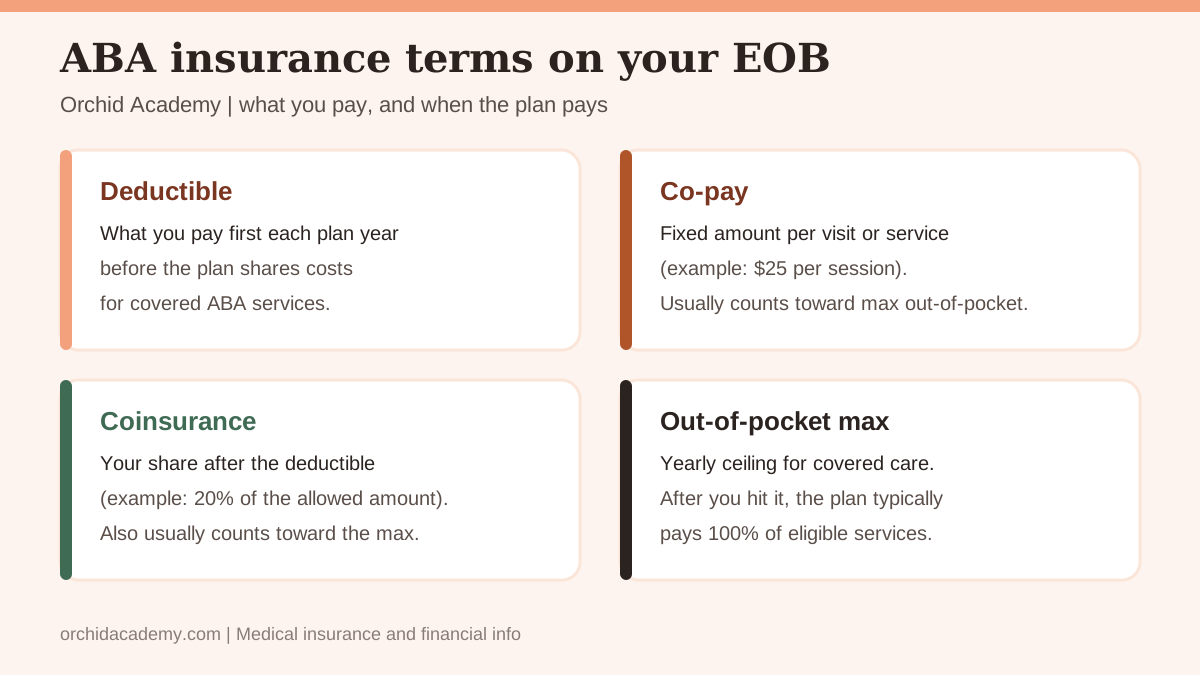
The cost-sharing terms
| Term | Plain-English meaning | Question to ask about ABA |
|---|---|---|
| Deductible | The amount you may pay for covered services before the plan starts paying its share, depending on the plan rules. | Does this service apply to the individual or family deductible? How much has been met this plan year? |
| Copay | A fixed amount a plan may require for a covered service. | Is there a copay for the assessment, each therapy session, or both? |
| Coinsurance | The percentage of an allowed charge that you may pay after the deductible, if the plan uses coinsurance. | What percentage applies after the deductible, and is the provider in network? |
| Out-of-pocket maximum | The most you generally pay for covered, in-network benefits in a plan year, subject to the plan’s terms. | What spending counts toward it, and how much has already been credited? |
| Allowed amount | The amount the plan recognizes for a covered service, often used to calculate the plan and member share. | Is the estimate based on the plan’s allowed amount or an unverified billed charge? |
The HealthCare.gov glossary explains these terms in more detail. It is a useful neutral reference when a plan representative uses a word differently from the one you expected.
The paperwork and approval terms
| Term | What it usually means | What to save |
|---|---|---|
| Benefits verification | A check of what the plan says about coverage, network, and member cost sharing. | Date, representative, and call reference number. |
| Prior authorization | A plan review before a service. It may also be called preauthorization, prior approval, or precertification. | The approval or request number, decision letter, and effective dates. |
| Assessment authorization | Approval, when required, for the initial clinical assessment. | Whether the assessment is authorized and any date limits. |
| Treatment authorization | Approval, when required, for the proposed treatment plan or a period of services. | The approved setting, date range, and any stated limits. |
| Reauthorization | A later review if a plan requires another approval period. | The current end date and when the provider submitted the next request. |
| EOB (Explanation of Benefits) | A statement explaining how the plan processed a claim. It is not automatically a bill. | The EOB alongside the provider invoice, before paying a disputed amount. |
Prior authorization can be important, but it is not a promise of payment. HealthCare.gov specifically cautions that preauthorization does not guarantee coverage of the cost. Ask the plan what is covered, what it needs, and what amount remains your responsibility.
How to read an EOB without panicking
Look for four things:
- The date of service and provider—make sure they are correct.
- The amount billed, allowed, paid by the plan, and assigned to you.
- Any reason code or note explaining a reduction or denial.
- Whether the document says you owe a provider, or simply explains how the plan processed the claim.
Compare the EOB with any invoice from the provider. If they do not match, pause before paying and ask both the provider and insurer to explain the difference. A denied claim can be a documentation or network issue, not necessarily the final coverage answer.
The questions worth asking on every benefits call
- Is this provider in network for ABA or adaptive-behavior services?
- Is authorization required for the assessment, treatment, or both?
- Which costs apply: deductible, copay, coinsurance, and out-of-pocket maximum?
- Does the plan use an approval period or renewal date?
- Can you give me a written benefit summary or call reference number?
If a plan says no to a treatment or claim, save the notice. Washington residents can review the Office of the Insurance Commissioner’s health-insurance denial and appeal guidance, then use our ABA denial and appeal checklist.
For Orchid’s current Washington carrier information, visit ABA therapy insurance coverage in Washington or request a call back for a benefits check. The insurer—not this guide or a benefits estimate—makes the final coverage decision for an individual plan.
Find out how our expert team can support your child’s journey:
Dr. Autumn Flick, BCBA
Board Certified Behavior Analyst
Keep exploring
- Washington ABA insurance guide
Translate plan language into what care you can start.
- Verify your benefits with Orchid
Request a call back and we help families check coverage before care starts.
- ABA therapy at Orchid Academy
How sessions work, what children learn, and where we provide care.
Related Articles
ABA Therapy Billing Red Flags: What Federal Oversight Means for Your Family
ABA therapy billing red flags are in the news after new CMS guidance and four federal audits. Here's what auditors actually found, and what a parent can check without an accountant.
Aug 17, 2026 · 6 min read
Does Medicaid Cover ABA Therapy? A Washington Apple Health Guide
Does Medicaid cover ABA therapy in Washington? Yes, through Apple Health, but only after a Center of Excellence evaluation. Here are the four steps, in order.
Aug 17, 2026 · 5 min read
How Much Does ABA Therapy Cost in Washington State
Real hourly rates, weekly and annual totals, and the actual math behind private-pay, in-network, and Apple Health (Medicaid) ABA therapy costs for Washington families.
Aug 14, 2026 · 7 min read