
How the ABA Insurance Process Works, Step by Step
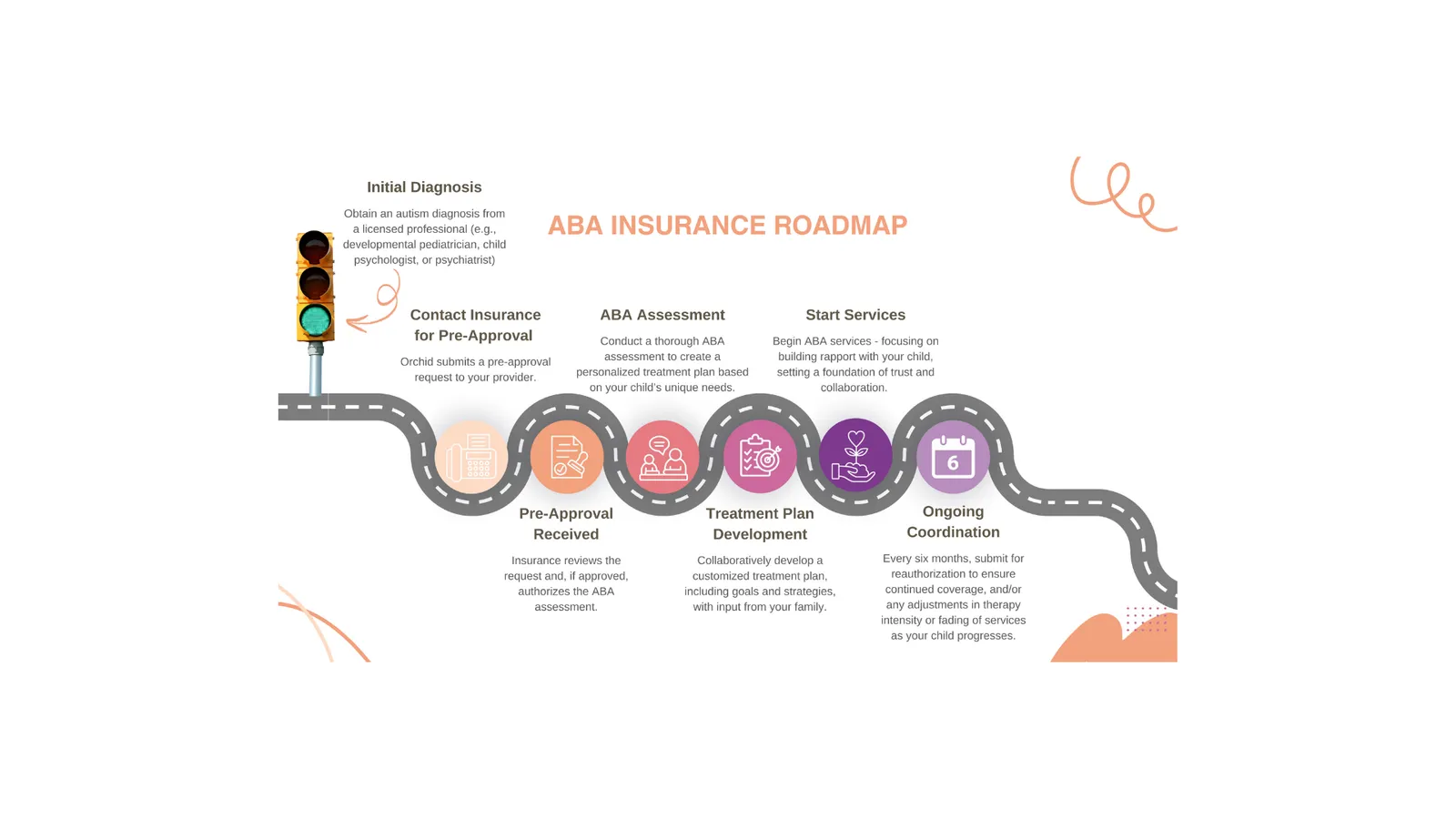
Starting ABA can involve two parallel tracks: figuring out whether a plan covers the service and figuring out what clinical support fits your child. The order, paperwork, and timing vary by plan, so no website can promise a start date. This guide helps you know what happens next, what to keep, and what to ask.
For carrier-specific details, start with ABA therapy insurance coverage in Washington. This page focuses on the process rather than comparing plans or defining every insurance term.
The short version
An insurance card is not a guarantee that a particular ABA service, provider, schedule, or bill will be covered. A benefits check tells you what the plan says today; an authorization, when required, is the plan’s review of a specific service request. The federal Marketplace glossary notes that prior authorization is not a promise that the plan will cover the cost. Read the plain-language definition.
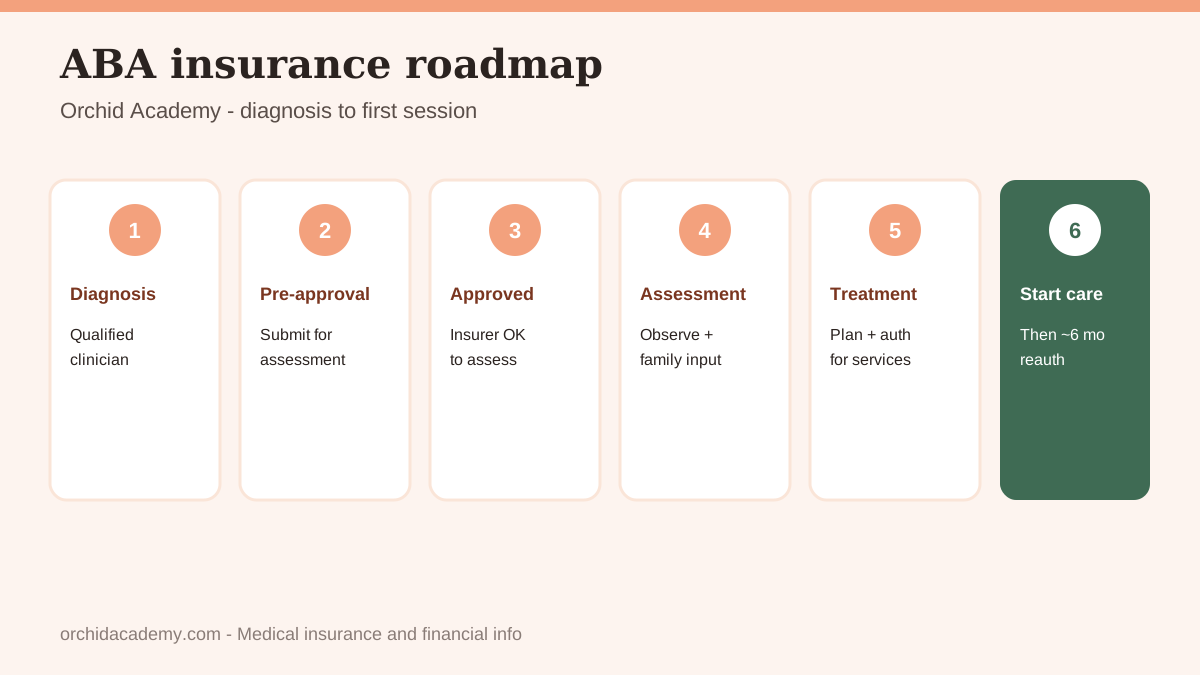
The practical sequence is usually:
- Share the diagnosis status, insurance card, and contact details with the provider.
- Confirm benefits, network status, cost-sharing, and whether authorization may be required.
- Complete an assessment if the provider and plan require one.
- Review a treatment recommendation with the family.
- Submit any required request for treatment authorization.
- Confirm the start plan, your expected cost, and the next review date.
Some steps can overlap. Others cannot. The plan documents and the provider’s intake team are the source of truth for your family.
Before the first benefits call
Have these in one place:
- The front and back of the insurance card
- The member’s name, date of birth, and plan holder’s name
- A diagnosis or diagnostic-evaluation status, if you have one
- The name of the provider you want to use
- A notebook or phone note for the representative’s name, call reference number, and date
If you do not have a diagnosis yet, that does not mean you have to wait to learn the intake path. Our guide to why a diagnosis is needed for ABA explains what to ask while you pursue an evaluation.
Step 1: Verify benefits and network status
Ask the insurer whether ABA or adaptive-behavior services are a covered benefit under your exact plan and whether the provider is in network. Then ask what you may owe: deductible, copay, coinsurance, and out-of-pocket maximum. Those terms are not interchangeable; our ABA insurance terms guide translates them into questions for an intake call.
Also ask whether the plan requires prior authorization for an assessment, treatment, or both. Use the words the representative uses, but ask them to explain what must happen before each service can start.
Step 2: Complete the assessment and discuss the recommendation
An assessment is where the clinical team learns about your child’s strengths, support needs, routines, and your family’s priorities. A treatment recommendation should explain the proposed goals, setting, and schedule in plain language. It should be a conversation—not a number delivered without context.
Bring practical constraints into that conversation: school, naps, siblings, transportation, sensory needs, and what your week can sustain. Our primary ABA-hours guide explains how goals, age, school, and family life can shape a schedule.
Step 3: Review any treatment authorization request
If the plan requires authorization, the provider may submit clinical documentation and the recommended plan. Ask the intake team:
- What has been submitted, and on what date?
- Is anything still needed from our family or prescribing clinician?
- What decision or reference number should we keep?
- Does the approval name a date range, a setting, or a number of hours?
- Who will tell us if the plan asks for more information?
Save written notices. They make it easier to spot a mismatch between what was requested, approved, scheduled, or billed.
Step 4: Confirm the first week before services begin
Before the first appointment, make sure everyone is working from the same plan. Confirm the starting setting, schedule, expected family cost, who to call about a billing question, and when progress will be reviewed. A quick confirmation is especially useful when a family changes employers, plans, or addresses during intake.
If you are deciding between an academy day and home-based care, read in-academy vs. in-home ABA before choosing a schedule that is difficult to maintain.
Step 5: Track renewals before coverage ends
Many plans periodically review ongoing services, but the cadence is plan-specific. Put the authorization end date, if you receive one, on your calendar. A few weeks before it ends, ask the care team whether another request is required and whether they need anything from you.
Keep a simple record with the plan year, deductible status, authorization dates, EOBs, invoices, and every reference number. That record is much more useful than trying to reconstruct a months-old phone call during a billing problem.
If a request is delayed or denied
Start with the letter or portal notice. It should identify the decision, the reason, the deadline, and the next step. Washington’s Office of the Insurance Commissioner explains that consumers have appeal rights when an insurer denies a treatment or bill dispute, and it provides state consumer-assistance options. Read the Washington appeal guidance.
Do not assume every denial means the same thing. It may be a missing document, an out-of-network issue, a coding question, or a coverage decision. Ask the plan to identify the exact reason in writing, then use our Washington ABA denial and appeal guide for a family-friendly checklist.
A five-question script for the insurance card
When you call, ask:
- Is ABA or adaptive-behavior treatment covered on this plan?
- Is this provider in network for the service we are requesting?
- Is prior authorization required for the assessment, treatment, or both?
- What deductible, copay, coinsurance, and out-of-pocket maximum apply?
- Can you give me a call reference number and send the answer through the member portal?
If you would like help interpreting the answer, request a call back. Orchid’s team can verify benefits for a specific intake, but the insurer makes the final coverage decision for the individual plan.
Find out how our expert team can support your child’s journey:
Dr. Autumn Flick, BCBA
Board Certified Behavior Analyst
Keep exploring
- ABA insurance in Washington
Authorizations, carriers, and common coverage questions.
- Verify your benefits with Orchid
Request a call back and we help families check coverage before care starts.
- ABA therapy at Orchid Academy
How sessions work, what children learn, and where we provide care.
Related Articles
ABA Therapy Billing Red Flags: What Federal Oversight Means for Your Family
ABA therapy billing red flags are in the news after new CMS guidance and four federal audits. Here's what auditors actually found, and what a parent can check without an accountant.
Aug 17, 2026 · 6 min read
Does Medicaid Cover ABA Therapy? A Washington Apple Health Guide
Does Medicaid cover ABA therapy in Washington? Yes, through Apple Health, but only after a Center of Excellence evaluation. Here are the four steps, in order.
Aug 17, 2026 · 5 min read
How Much Does ABA Therapy Cost in Washington State
Real hourly rates, weekly and annual totals, and the actual math behind private-pay, in-network, and Apple Health (Medicaid) ABA therapy costs for Washington families.
Aug 14, 2026 · 7 min read