
What I Tell Families in the First Months After Diagnosis

For the step-by-step checklist (therapies, hours, paperwork, calls), use the new autism diagnosis guide. This is what I tell families in the messy first months, from 20 years of sitting with that shock, grief, and then forward motion.
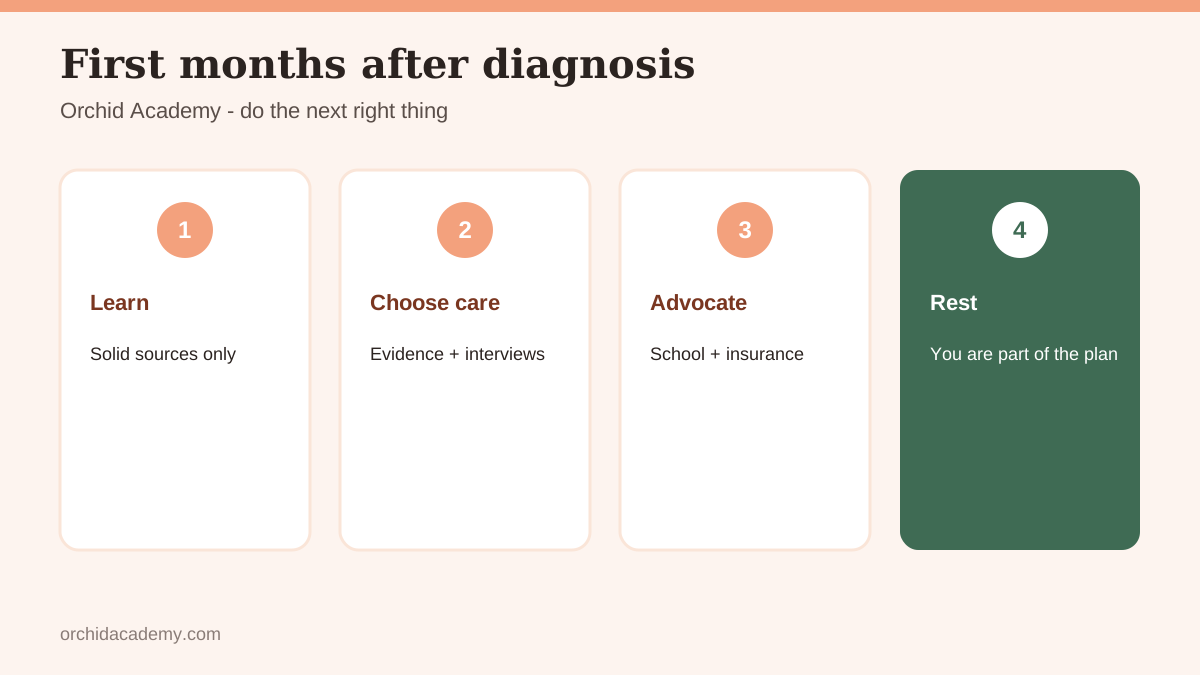
What to do (and what to skip)
- You already did the hard part by seeking answers. That counts.
- Learn from solid sources (Understanding Autism, your diagnosticians). Skip doom-scroll forums that leave you more scared and no clearer.
- Build a therapy stack on evidence. ABA for skill-building and behavior support; speech for communication; OT for daily living and sensory needs when indicated. See types of autism therapy.
- Interview ABA providers. Ask about compassionate, individualized care (including how they assess behavior and teach skills). Use questions for a new provider. If a past ABA experience went badly, read switching providers.
- Stay in the loop with the clinical team. Your daily data matters as much as their graphs.
- Advocate at school and insurance with clear asks. You do not need to be an expert on day one; you need a paper trail and a next step.
- Name small wins out loud. Progress is often quiet at first.
- Protect sleep, food, and one break for yourself. Caregiver collapse helps no one.
- Expect the plan to change as your child grows.
You do not have to do all nine this week. Start with learning, one benefits check, and one provider conversation. Browse ABA therapy and locations, or request a call back.
A 30 / 60 / 90-day version of the same list
The nine items above are the whole job. This is the order that keeps families from trying to do them in one weekend.
First 30 days. Sit with the report. Write down three strengths and three worries in plain language. Get on waitlists you have not joined yet (ABA intake, speech/OT if those were recommended, ESIT if under 3). Start a benefits check. Tell siblings and close family a short, honest version: autism is how this brain works. Sleep is a treatment goal. Protect it.
Days 30 to 60. Interview one or two ABA providers with this question list. If a past ABA experience went badly, read switching providers before you sign. Request a school evaluation if your child is 3 or older and you do not already have an IEP or IFSP. Put the request in writing.
Days 60 to 90. Start the therapy you actually got authorized, even if the hours are not the eventual target. Align one goal across home and clinic. Schedule a follow-up with the diagnostician only if the report left questions that block services. Add enrichment (music, swimming, a playgroup) only after the core stack has a start date.
If 90 days have gone by with research and no intake call, get on a list this week.
What to ignore on purpose
- Recovery timelines, “cure” protocols, and anyone who needs you to drop other therapies
- Parent rankings of whose child is “more autistic”
- Forum threads that leave you more scared and no clearer
- The idea that you have to become a full-time therapist to be a good parent
Solid sources: your diagnosticians, Understanding Autism, types of autism therapy, and the new autism diagnosis guide for the paperwork path.
Grief and forward motion can share a week
A diagnosis names something you already saw. It can still knock the air out. Guilt, relief, anger at the wait, and a sudden urge to overhaul the house often arrive together. You can feel all of that and still be a parent who just got a long document.
If two adults are in the house, you will not process this at the same speed. That mismatch is common enough that we wrote autism and marriage. Siblings need their own conversation: autism for siblings.
One practical rule: make one service call on the days that feel like fog. One call is a complete day’s work.
Frequently asked questions
Do we have to start ABA immediately? Get in line this week even if therapy starts later. Diagnostic and provider waitlists run on calendar time your child does not get back. See why a diagnosis is needed for ABA.
How many therapies should we start at once? Usually one core (often ABA) plus speech or OT if those were clearly indicated. Three new clinics in one month is how burnout starts. Therapy types explains how they should coordinate.
What if we disagree with the diagnosis? You can seek a second evaluation. You can also start ESIT or a school evaluation while you wait.
Where does insurance fit in this messy first season? A benefits check and a copy of the diagnostic report. That is the whole first insurance job. The rest is the insurance journey and Washington coverage.
See how our team can support your child
Dr. Autumn Flick, BCBA
Board Certified Behavior Analyst
Keep exploring
- Parent & family training
Practical strategies so skills transfer from session to home.
- Talk with our team
Request a call back about care for your child.
- Telehealth ABA in Washington
Parent training and ABA support by Zoom statewide.
Related Articles
Autistic Child Kicked Out of Daycare in Washington? What to Do This Week
If your autistic child was kicked out of daycare in Washington: what the rules require, your rights under the ADA, free evaluations, and full-day options.
Oct 30, 2026 · 7 min read
ABA Therapist Turnover: What's Normal and What Your Provider Owes You
ABA therapist turnover is common. What the research says, what a provider should do when your child's RBT leaves, and what to ask about staffing at intake.
Oct 23, 2026 · 9 min read
Can an ABA Provider Discharge My Child? What You Are Owed and What to Do Next
Yes, but the BACB ethics code limits the reasons and requires a written plan. What you are owed, how attendance and cancellation rules apply, and next steps.
Oct 23, 2026 · 9 min read