
ABA Insurance Denial? Appeal Steps for Washington Families

Updated September 1, 2026. This is general education, not legal or clinical advice. The denial letter and your plan documents set the applicable deadlines and process.
An ABA insurance denial can feel like a verdict, especially when services are already underway or an assessment is waiting for approval. It is not always the final answer. First, protect the deadline: save the denial letter or Explanation of Benefits (EOB), write down the claim or authorization number, and find the appeal instructions that apply to your plan.
Some denials come from a coding error, missing authorization, coverage eligibility problem, or a disagreement about medical necessity. The right response depends on the reason given. This guide helps Washington families organize the record, use the plan’s internal appeal process, and understand when an outside review or consumer advocate may be the next step.
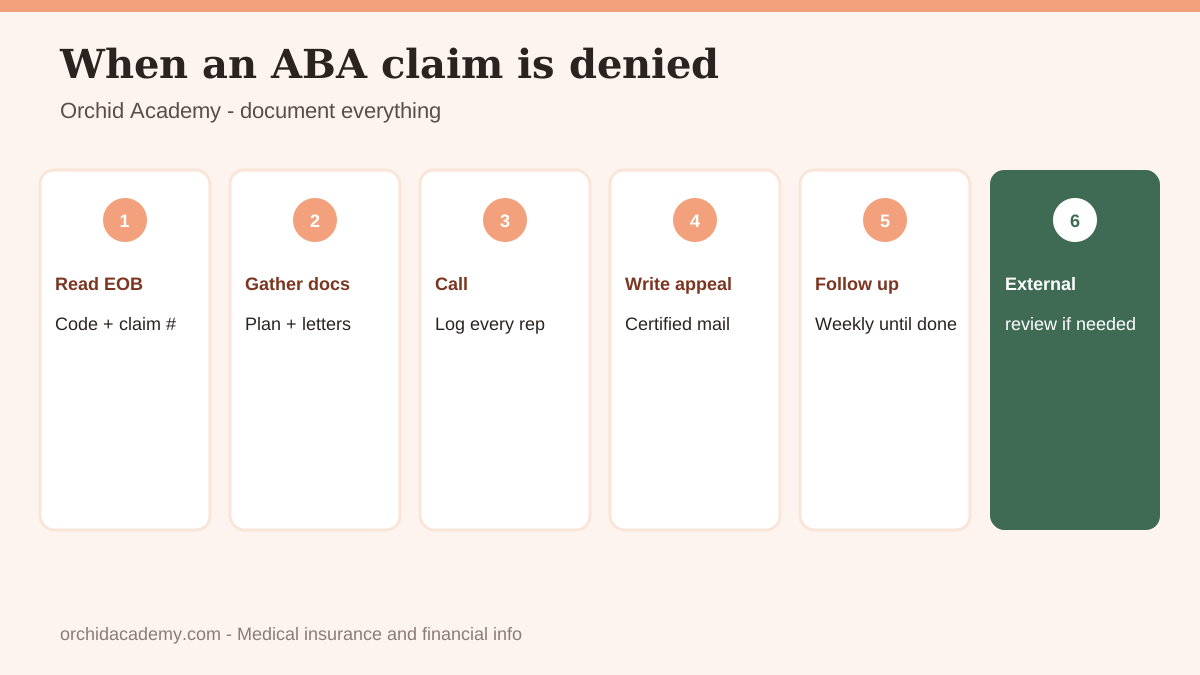
The first day: protect the deadline and the paper trail
Before trying to solve the denial over the phone, create one folder for every document and note. The denial notice matters because it should identify the decision, the reason, the deadline, and the next review option. An EOB is not a bill; it is the insurer’s statement of what the provider charged, what the plan allowed and paid, and what you may owe. The Washington Office of the Insurance Commissioner explains those terms and defines an external review as a review by an independent organization.
Save copies of:
- The denial letter or EOB, including every page
- The claim, authorization, and member ID numbers
- The date you received the notice and the appeal deadline
- Your plan’s appeal instructions and Summary of Benefits and Coverage
- Every document you submit and confirmation that it was received
If a deadline is close, use the submission method stated in the denial notice or plan materials. Keep a complete PDF or paper copy and proof of submission.
Identify what was denied before choosing the fix
The wording on the notice usually points to the next move. Common categories include:
- A pre-service authorization denial: the plan did not approve an assessment, treatment plan, or future sessions.
- A processed claim denial: services were provided, but the insurer did not pay all or part of the bill.
- A network or eligibility issue: the plan says the provider is out of network, coverage was inactive, or another plan should pay first.
- A documentation or medical-necessity issue: the insurer says it needs more records or disagrees that the requested service meets the plan’s criteria.
Do not guess which category applies. Ask the insurer to explain the exact denial code and reason in plain language, then compare that answer with the written notice. For a broader overview of deductibles, authorizations, and coverage terms, see Orchid’s Washington ABA insurance guide.
Call the insurer with a short, useful list
Calling can clear up a typo or missing item, but it does not replace a written appeal when the plan requires one. During the call, ask:
- What is the exact reason and code for this denial?
- Is this a claim denial, an authorization denial, or both?
- What is the appeal deadline and where must the appeal be submitted?
- Which records or forms would make the file complete?
- Is there an expedited route if the treating clinician believes a delay is urgent?
Write down the representative’s name, the date and time, and the call reference number. A one-page call log makes it much easier to spot conflicting answers and explain the timeline later.
Build the appeal record
The strongest appeal is organized around the insurer’s stated reason. Depending on that reason and what your plan asks for, the file may include:
- The denial letter or EOB
- The treatment plan and relevant progress information
- Authorization approvals or prior correspondence
- A clinical letter or records the insurer specifically requests
- A concise call log and copies of earlier submissions
Ask your clinical and billing teams which records they can provide. Keep the appeal focused on the question the plan actually asked. Adding a stack of unrelated documents can bury the evidence that matters.
Ask the care team for exactly the right support
Share the denial notice with the care team as soon as you can. The useful question is not simply, “Can you appeal this for me?” It is, “What does the insurer say is missing, and which record can speak to that point?” Depending on the reason, the team may be able to help locate an authorization record, treatment-plan detail, a billing correction, or a clinical document that the plan specifically requests.
Bring the member ID, claim or authorization number, date of service, and the denial reason to that conversation. Confirm who is submitting each item and where the family will keep the final copy. A provider can help supply accurate records, but the plan—not the provider—decides its appeal route and deadline.
Use the internal appeal process in writing
Follow the plan’s instructions exactly. A short cover note can make the request easier to review:
I am appealing the denial dated [date] for [service or claim number]. The notice lists [reason]. I am asking the plan to reconsider the decision based on the attached [records or correction]. Please confirm receipt and send the written decision to me at [address or portal].
This is not a legal template; use the language and forms your plan requires. If you submit through a portal, download the confirmation. If the plan requires mail or fax, retain the delivery record. Do not rely on a verbal promise that the case is being handled.
If the internal appeal is denied: understand the Washington route
For eligible health plans, Washington describes a path from the initial denial to an internal appeal and then, in some situations, an external review by an Independent Review Organization. The route and timing differ by plan type and urgency. The state’s appeals overview and step-by-step guide explain when an external review can follow an internal decision.
Do not assume every plan uses the same rules. A fully insured employer plan may be regulated by the Washington Office of the Insurance Commissioner, while a self-funded employer plan is generally governed under federal rules. The state’s plan-type guide explains how to identify the right agency or contact.
Get the right outside help when you need it
If your insurer is regulated by Washington and you need help understanding the process, the Office of the Insurance Commissioner’s Consumer Advocacy team can answer questions and accept complaints. Its current consumer help line is 800-562-6900. The office cannot act as your lawyer or interpret your policy for you, but it can help explain the process and ask an insurer for a response.
For a self-funded employer plan, start with your employer’s benefits contact and the federal contact listed in the state’s plan-type guide. If the denial involves an immediate risk to care, ask the treating clinician and the plan whether the situation qualifies for an expedited review instead of waiting for the standard timetable.
Avoid these common mistakes
- Missing the deadline while waiting for a callback. Submit the appeal route in the notice on time, even if a phone representative says they are looking into it.
- Sending originals. Keep the original notice and send copies unless the plan specifically tells you otherwise.
- Arguing a different issue. If the denial is for a missing authorization, lead with the authorization record; if it is for a coding error, lead with the correction.
- Treating an EOB as a final bill. Confirm what the insurer actually denied and what, if anything, you owe before paying a disputed amount.
- Letting the provider and insurer work from different facts. Give the care team the claim or authorization number and the exact denial reason early.
Keep the next step manageable
Start with the smallest next action: save the notice, identify the deadline, ask the insurer what it needs, and share the exact reason with the care team. If an insurance authorization is limiting an ABA plan, Orchid’s guide to ABA therapy hours explains how families can discuss priorities and review timing with their BCBA. For questions about inaccurate or troubling billing, see ABA therapy billing red flags.
Know your terms while you appeal: Orchid’s insurance glossary and insurance process roadmap cover the language and the first steps. Contact Orchid to ask what records the care team can provide for your plan’s process.
Find out how our expert team can support your child’s journey:
Dr. Autumn Flick, BCBA
Board Certified Behavior Analyst
Keep exploring
- Insurance guide & next steps
Coverage basics plus how Orchid helps with benefits.
- Verify your benefits with Orchid
Request a call back and we help families check coverage before care starts.
- ABA therapy at Orchid Academy
How sessions work, what children learn, and where we provide care.
Related Articles
ABA Therapy Billing Red Flags: What Federal Oversight Means for Your Family
ABA therapy billing red flags are in the news after new CMS guidance and four federal audits. Here's what auditors actually found, and what a parent can check without an accountant.
Aug 17, 2026 · 6 min read
Does Medicaid Cover ABA Therapy? A Washington Apple Health Guide
Does Medicaid cover ABA therapy in Washington? Yes, through Apple Health, but only after a Center of Excellence evaluation. Here are the four steps, in order.
Aug 17, 2026 · 5 min read
How Much Does ABA Therapy Cost in Washington State
Real hourly rates, weekly and annual totals, and the actual math behind private-pay, in-network, and Apple Health (Medicaid) ABA therapy costs for Washington families.
Aug 14, 2026 · 7 min read